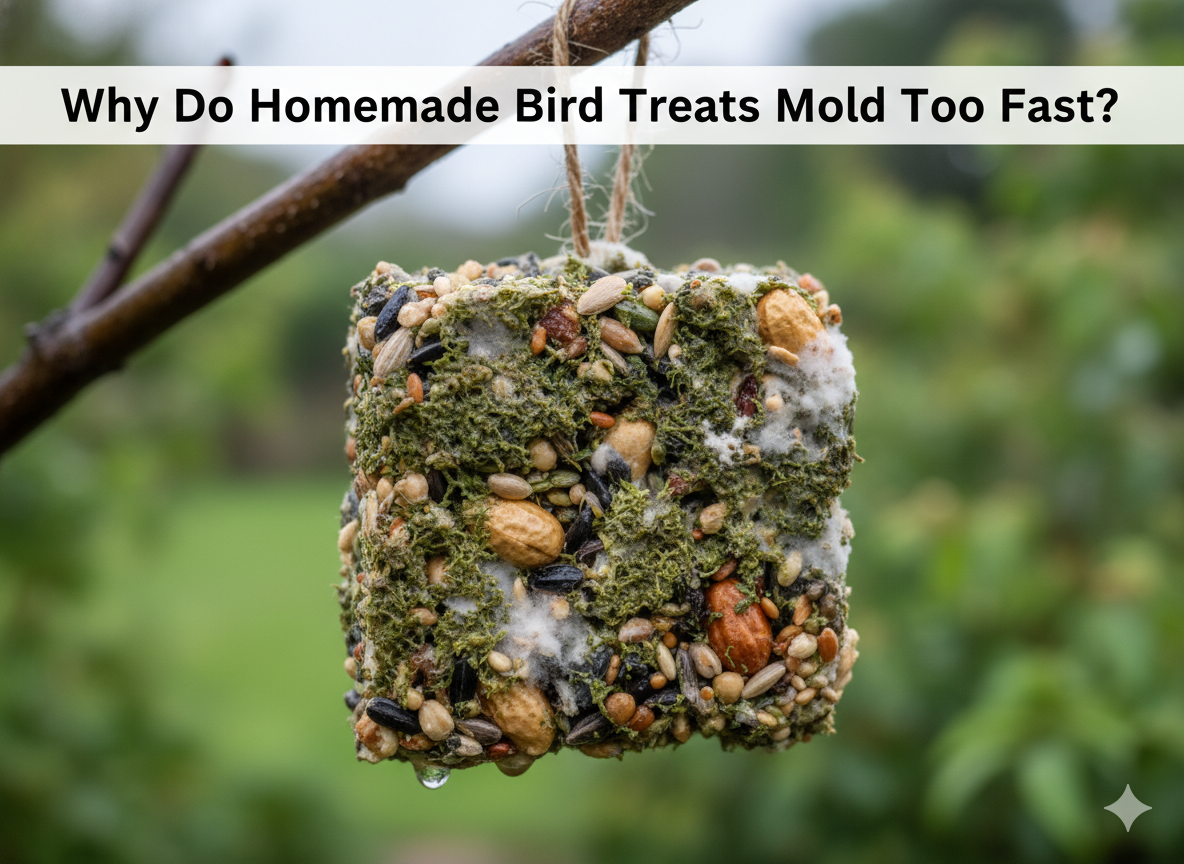
Have you ever hung a fresh suet cake outside, only to find it covered in green fuzz days later? You are likely wondering why homemade bird treats mold so quickly. The direct answer involves three primary factors: high moisture content, warm weather, and a lack of chemical preservatives.
Commercial brands use artificial additives to extend their shelf life drastically. Your DIY versions rely entirely on natural ingredients that spoil rapidly when exposed to humidity and rain. Let’s fix this spoiling issue so you can feed your backyard flock safely.
Primary Causes: Why Do Homemade Bird Treats Mold Too Fast?
Homemade bird treats mold quickly because of specific environmental conditions and recipe missteps. Fungal spores thrive in warm, damp environments. When you place a nutrient-dense food source outside, nature takes its course rapidly. Here are the exact reasons your DIY bird food spoils so fast.
Excess Moisture in Ingredients
Water acts as the primary catalyst for fungal growth in outdoor feeders. Many backyard birders mistakenly add water, liquid gelatin, or fresh fruit to their seed mix. These wet ingredients create a perfect breeding ground for aggressive bacteria and mold. Even using raw, unrendered beef fat holds residual tissue moisture that spoils within days.
Absence of Synthetic Preservatives
Store-bought suet blocks sit on retail shelves for months without degrading. Manufacturers achieve this longevity by adding chemical preservatives like BHT or calcium propionate. Your homemade batches skip these artificial chemicals, keeping the diet natural. Consequently, your treats have a limited lifespan similar to fresh produce left on a kitchen counter.
Environmental Factors: Heat and Humidity
Local weather drastically impacts the lifespan of outdoor wildlife food. Temperatures rising above 70°F (21°C) accelerate fat rancidity and fungal blooming. Rain and morning dew introduce external, uncontrollable moisture to your seed cakes. The Cornell Lab of Ornithology strongly advises against offering fat-based suet during peak summer heat for this exact reason.
How to Stop Mold Growth on DIY Bird Seed Blocks?
You can extend the shelf life of your backyard offerings by adjusting your preparation methods. Small, deliberate tweaks to your recipe make a massive difference in longevity. Follow these precise steps to keep your wild bird food fresh and safe.
Render Your Fat Properly
Raw animal fat contains connective tissue, blood, and water. You must render beef fat into pure suet before mixing in your seeds. Rendering involves slowly melting the fat on a stove and straining out all impurities. This crucial step removes the biological moisture that mold spores desperately need to survive.
Skip the Fresh Fruit
Fresh berries, citrus, and apple slices rot incredibly fast outdoors. Swap out raw fruits for completely dehydrated alternatives. Dried cranberries, raisins, or dried mealworms offer excellent nutrition without the dangerous water weight. Always chop dried fruit into small, bite-sized pieces to prevent choking hazards for smaller songbirds.
Master the Fat-to-Seed Ratio
A crumbly, loose suet cake exposes more seed surface area to rain and humidity. You need a solid, tight bind to repel water. Use a strict ratio of one part melted fat to two parts dry ingredients. This ratio effectively coats every single seed in a protective, water-repellent layer of grease.
Implement Proper Storage Techniques
Never leave your backup seed block supply sitting at room temperature. Wrap your extra seed cakes individually in non-stick wax paper. Store them securely inside an airtight container in your freezer. Only bring a frozen block outside when you are actively ready to hang it in the feeder.
[Image Placeholder: A person placing wax-paper wrapped bird seed blocks into a freezer container. Alt text: Freezing DIY suet cakes to prevent why do homemade bird treats mold too fast.]
Are Moldy Bird Treats Dangerous to Wild Birds?
Yes, offering spoiled food poses severe health risks to local wildlife. Moldy seeds and rancid fats harbor dangerous, invisible pathogens. Fungi produce microscopic mycotoxins, which cause respiratory failure or fatal neurological issues in songbirds.
Aspergillus, a common green and black mold found on damp seeds, causes a disease in birds called Aspergillosis. This fatal fungal infection attacks a bird’s lungs and internal air sacs. Never try to scrape the visible mold off and serve the rest of the block. The invisible mycelium network has already penetrated the entire tree.
Throw the entire contaminated block in the trash immediately to protect your flock. Sanitize your feeders thoroughly after discovering any spoiled food. Scrub the metal cages or wooden platforms with a strong solution of nine parts water to one part bleach. The National Audubon Society recommends fully cleaning your feeders at least once every two weeks.
How to Identify Spoiled Bird Food Before It Harms Wildlife?
You must inspect your outdoor feeders daily during damp weather. Catching spoilage early prevents disease transmission among your local visiting flock. Look for these specific warning signs before birds ingest the food.
- Visual Changes: Inspect for white, green, or black fuzz growing on the surface of the fat. Discoloration or dark spots on individual sunflower seeds also indicate internal rot.
- Texture Breakdown: A healthy fat block stays firm and highly cohesive. If the block becomes excessively mushy, slimy, or starts disintegrating rapidly without bird activity, it is rotting.
- Unpleasant Odors: Pure rendered fat has virtually no smell. If the treat emits a sour, rancid, or distinctly yeast-like odor, harmful bacteria have taken over.
The Role of Feeder Design in Preventing Fungal Growth
The hardware you utilize is just as important as the recipe you mix. Proper airflow and immediate drainage keep seed blocks dry after storms. Select your feeding stations carefully to extend the lifespan of your food.
- Wire Mesh Feeders: Standard wire suet cages offer excellent, uninterrupted ventilation. The open design allows wind to dry the block quickly after a passing rain shower.
- Weather Domes: Attach a clear, wide plastic baffle directly above your cage. This acts like an umbrella, physically shielding the food from direct downpours and hot midday sun.
- Avoid Solid Bottoms: Do not place fat blocks on flat, solid wooden platform feeders. Rainwater pools at the bottom, turning the base of your treat into a soggy, toxic mess.
Best Weather Conditions for Hanging Suet and Seed Cakes
Timing plays a crucial role in preventing food waste and bacterial growth. You should treat pure fat and seed blocks strictly as a cold-weather supplement. Winter remains the absolute ideal season for offering high-energy suet.
- Optimal Temperature: Hang DIY treats only when daytime highs consistently stay below 50°F (10°C).
- Shade Placement: Always position your feeders in deeply shaded areas of the trees. Direct sunlight quickly melts the fat, causing the block to drop to the ground and spoil.
- Wind Protection: Place feeders on the leeward side of your house to protect them from driving rain. Keeping rain physically off the food drastically reduces fungal outbreaks.
Alternative No-Melt Recipes for Warmer Months
If you want to feed woodpeckers and nuthatches during the spring, you must adjust your recipe. A traditional pure suet block will melt, drip, and spoil immediately. You can create a specialized “no-melt” dough that withstands moderate heat much better.
The Peanut Butter Dough Method
Combine crunchy peanut butter with a heavy binding agent to absorb excess oils. Mix one cup of peanut butter with one cup of plain rolled oats and one cup of yellow cornmeal. The dry oats and cornmeal absorb the peanut oil, creating a crumbly, stable dough. This tight mixture resists melting and rotting much better than animal fat.
Using Agar-Agar Instead of Gelatin
If you prefer making gelatin-style seed wreaths, avoid animal-based gelatin entirely in the summer. Animal gelatin melts rapidly in the sun and rots quickly. Instead, use agar-agar, a resilient plant-based binding agent derived from seaweed. Agar-agar remains solid at much higher ambient temperatures and strongly resists rapid bacterial breakdown.
Choosing the Right Ingredients to Maximize Shelf Life
Ingredient selection dictates exactly how long your treats survive outside. Some seeds absorb environmental water significantly faster than others. Choose hard-shelled or naturally oily seeds to repel atmospheric moisture.
- Black Oil Sunflower Seeds: These have thick outer shells and a high oil content. This makes them naturally water-resistant and highly nutritious.
- Safflower Seeds: A hard, bitter white seed that resists rot effectively. It also naturally deters nuisance squirrels.
- Cracked Corn: Avoid using large amounts in humid, wet climates. It acts like a dry sponge and grows toxic mold very quickly.
- Peanuts: Only use roasted, unsalted peanuts still in the shell or robust peanut splits. Raw peanuts easily harbor dangerous aflatoxins when exposed to damp air.
Step-by-Step: The Ultimate Long-Lasting Suet Recipe
Follow this exact procedure to create a moisture-free, long-lasting backyard treat. This specific method focuses on eliminating water at every single stage.
- Melt the Base: Melt exactly 1 cup of rendered beef suet and 1 cup of crunchy peanut butter in a saucepan over low heat.
- Add Dry Binders: Stir in 2 full cups of quick oats and 2 cups of yellow cornmeal until fully incorporated.
- Mix the Seeds: Remove the pan from the heat completely. Fold in 1 cup of black oil sunflower seeds and 1 cup of dehydrated mealworms.
- Mold and Press: Pour the thick mixture into silicone baking molds. Press down very firmly with a spatula to remove all hidden air pockets.
- Freeze Solid: Place the filled molds in the freezer for at least 4 hours before serving outdoors.
Conclusion
Understanding exactly why homemade bird treats mold too fast helps you actively protect your local wildlife. By deliberately eliminating water, properly rendering fat, and skipping fresh fruits, you create a safer food source. Always monitor your hanging feeders closely after heavy rainstorms or sudden temperature spikes.
Remove any suspicious or discolored blocks immediately to prevent the spread of fatal avian diseases. Keep your extra batches locked safely away in the freezer until needed. By following these preventative steps, your feathered visitors will enjoy healthy, energy-rich meals all season long.
Frequently Asked Questions (FAQ)
How long do homemade bird treats last outside?
In freezing winter temperatures, they can easily last two to three weeks without issues. During humid spring or summer days, they usually spoil within 3 to 5 days.
Can wild birds smell mold on food?
Most common backyard songbirds possess a very poor sense of smell. They cannot detect invisible mycotoxins solely by scent. They will readily consume dangerous, spoiled food if you leave it available to them.
Why does my bird seed block fall apart in the rain?
Blocks crumble rapidly when you use too many dry ingredients and insufficient fat to bind them. It also happens if you fail to press the warm mixture firmly into the mold, which can create internal air pockets.