Parrot biting typically stems from fear, territorial behavior, hormonal changes, or inadequate socialization rather than aggression. Most biting issues can be resolved through consistent positive reinforcement training, environmental modifications, and understanding your bird’s body language cues.
What Causes Parrot Biting Behavior?
Parrot biting results from natural survival instincts rather than malicious intent. Birds use their beaks as tools for communication, exploration, and self-defense in the wild.
Primary triggers include:
- Fear responses to sudden movements, loud noises, or unfamiliar situations.
- Territorial defense of perceived safe spaces like cages or perches.
- Hormonal surges during breeding seasons (spring and fall typically).
- Overstimulation from excessive handling or chaotic environments.
- Resource guarding of food, toys, or preferred human companions.
- Pain or illness causes defensive reactions to touch.
- Inadequate socialization during critical development periods.
Choose an immediate environmental assessment if your parrot suddenly develops biting behavior after being well-behaved, as this often indicates illness or environmental stressors requiring prompt attention.
How to Recognize Pre-Bite Warning Signs?
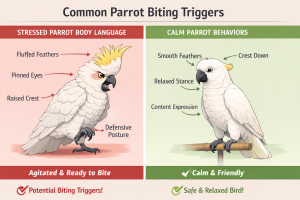
Understanding parrot body language prevents most biting incidents before they occur. Birds telegraph their intentions through clear physical cues.
Critical warning signals:
- Pinned or flashing eyes (pupils rapidly contracting and dilating).
- Feathers slicked down against the body in a defensive posture.
- Raised crest feathers (in crested species), indicating high arousal.
- Lunging motions toward perceived threats without making contact.
- Tail fanning combined with lowered head positioning.
- Vocalizations like hissing, growling, or sharp alarm calls.
- Backing away while maintaining eye contact and open beak.
Common mistake: Ignoring subtle early warnings like slight feather positioning changes. Intervening at the first sign prevents escalation to actual biting.
Decision rule: If you see two or more warning signs simultaneously, immediately stop your current interaction and give the bird space to calm down.
Effective Training Methods to Stop Parrot Biting
Positive reinforcement training addresses the root causes of biting while building trust between the bird and handler. Punishment-based methods typically worsen the behavior.
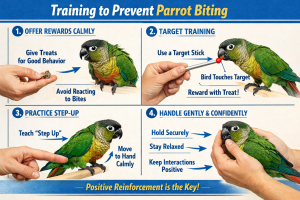
Step-by-step training approach:
- Establish baseline calm: Work only when your parrot is relaxed and receptive
- Use target training: Teach the bird to touch a stick for treats, redirecting bite impulses
- Practice “step up” commands: Reward successful perching on the hand/stick with immediate treats
- Implement “time out” protocol: Calmly place the bird in a neutral location (not the cage) for 2-3 minutes after bites
- Reward alternative behaviors: Give treats for gentle beak contact or appropriate vocalizations
- Maintain consistency: All family members must use identical training methods
Training schedule: 5-10 minute sessions, 2-3 times daily work better than lengthy training periods that may overstimulate your bird.
Edge case consideration: Birds with previous trauma may require weeks or months of patient conditioning before showing improvement. Professional animal behaviorist consultation helps with severe cases.
Environmental Modifications to Reduce Parrot Biting
Creating a secure, enriched environment addresses many underlying causes of defensive biting behavior. Environmental stressors often trigger bite responses in otherwise well-socialized birds.
Essential environmental changes:
- Cage placement away from high-traffic areas, windows with outdoor bird activity, and loud appliances
- Consistent lighting schedule with 10-12 hours of darkness to regulate hormonal cycles
- Multiple perch types (natural wood, rope, different diameters) to prevent foot discomfort
- Foraging opportunities through puzzle feeders and hidden treats to reduce boredom
- Safe retreat spaces where the bird can withdraw without human interference
- Background noise control using soft music or white noise to mask sudden sounds
Territorial management: Avoid reaching into the cage for routine tasks. Train your parrot to exit the cage before handling to reduce territorial defensive responses.
Choose larger cage upgrades if your bird spends more than 8 hours daily confined, as cramped conditions increase stress-related biting incidents.
When Hormonal Changes Trigger Parrot Biting?
Seasonal hormonal fluctuations dramatically increase biting behavior, particularly in mature birds during spring and fall breeding periods. Understanding these natural cycles helps manage expectations and modify handling approaches.
Hormonal biting characteristics:
- Increased intensity of bite force compared to fear-based biting.
- Mate guarding behavior, where a bird becomes possessive of one family member.
- Nesting instincts leading to aggressive territory defense around dark, enclosed spaces.
- Regurgitation attempts followed by biting when “feeding” behavior is rejected.
- Duration of 4-8 weeks during peak hormonal periods.
Management strategies during hormonal periods:
- Reduce petting to head and neck areas only (avoid back, wings, under-wing areas).
- Limit dark spaces by removing access to boxes, closets, or cage corners.
- Maintain 12+ hours of darkness nightly to discourage breeding behaviors.
- Increase exercise opportunities through supervised flight time or climbing activities.
- Avoid reinforcing pair-bonding by having multiple family members interact with the bird.
Professional consultation is recommended if hormonal aggression persists beyond 8 weeks or includes self-destructive behaviors like feather plucking.
Medical Issues That Cause Defensive Biting
Pain, illness, or physical discomfort frequently manifests as sudden-onset biting behavior in previously gentle birds. Medical evaluation should be the first step when biting appears without obvious behavioral triggers.
Health-related biting indicators:
- Sudden behavior change in well-socialized, previously calm birds.
- Specific body area sensitivity, where the bird bites when particular regions are touched.
- Accompanying symptoms like changes in appetite, droppings, or activity levels.
- Seasonal patterns that don’t align with typical hormonal cycles.
- Age-related onset in senior birds (over 15 years for most species).
Common medical causes:
- Arthritis or joint pain makes perching and movement uncomfortable.
- Nutritional deficiencies affect neurological function and mood regulation.
- Respiratory infections cause general discomfort and defensive responses.
- Heavy metal toxicity from inappropriate cage materials or environmental exposure.
- Reproductive disorders in female birds cause abdominal pain
Decision rule: Schedule avian veterinary examination within 48 hours if biting behavior appears suddenly in a previously well-behaved bird, especially when combined with any physical symptoms.
Building Long-Term Trust to Prevent Parrot Biting
Sustainable bite prevention requires consistent relationship-building practices that address the bird’s need for security, predictability, and positive social interaction.
Trust-building fundamentals:
- Predictable daily routines for feeding, interaction, and cage maintenance.
- Respect for bird’s autonomy by allowing choice in interaction timing and duration.
- Consistent body language using slow movements and calm vocal tones.
- Positive association training where your presence predicts good things (treats, attention, play).
- Gradual socialization with new people, environments, and experiences.
- Emergency preparedness so the bird remains calm during necessary handling (vet visits, emergencies).
Weekly progress markers:
- Week 1-2: Bird allows approach without defensive posturing.
- Week 3-4: Accepts treats directly from the hand without hesitation.
- Week 5-6: Steps onto hand/perch willingly when requested.
- Week 7-8: Remains calm during gentle handling and basic care tasks.
Long-term maintenance: Even well-trained birds require ongoing positive reinforcement and environmental management to prevent regression to biting behaviors during stressful periods.
FAQ
How long does it take to stop a parrot from biting?
Most parrots show improvement within 2-4 weeks of consistent training, but complete behavior modification typically takes 2-3 months. Severely traumatized or hormonal birds may require 6+ months.
Should I punish my parrot for biting?
No. Punishment increases fear and worsens biting behavior. Use positive reinforcement and brief time-outs instead of yelling, hitting, or aggressive responses.
Why does my parrot only bite certain family members?
Parrots often bond strongly with one person and may bite others due to jealousy, territorial behavior, or lack of socialization with multiple handlers.
Is it normal for young parrots to bite more than adults?
Yes. Juvenile parrots explore with their beaks and haven’t learned bite inhibition. Consistent training during the first year prevents adult biting problems.
Can diet changes reduce parrot biting?
Proper nutrition supports a stable mood and reduces hormonal fluctuations that trigger biting. Pelleted diets with fresh vegetables work better than seed-only diets.
What should I do immediately after my parrot bites me?
Remain calm, avoid dramatic reactions, and calmly place the bird in a neutral location for 2-3 minutes. Clean any wounds and assess what triggered the bite.
Do some parrot species bite more than others?
Larger species like macaws and cockatoos can inflict more damage, but biting frequency depends more on individual personality, training, and environment than species.
When should I seek professional help for parrot biting?
Consult an avian behaviorist if biting persists after 8 weeks of consistent training, causes serious injury, or is accompanied by self-destructive behaviors.
Can older parrots learn to stop biting?
Yes, but older birds may take longer to modify established behaviors. Patience and consistency are essential for senior parrot training success.
Why does my parrot bite during cage cleaning?
Cage cleaning triggers territorial defense. Train your parrot to exit the cage before cleaning, or clean when the bird is in another room.
Conclusion
Parrot biting stems from instincts rather than malicious behavior, making it entirely manageable through proper understanding and training techniques. Success requires identifying the specific triggers affecting your bird, whether fear-based, territorial, hormonal, or medical, then implementing appropriate environmental modifications and positive reinforcement strategies.