Parrots ignore new toys primarily due to neophobia—an instinctual fear of unfamiliar objects that helped their wild ancestors survive. This natural wariness, combined with factors like improper toy placement, overwhelming choices, or previous negative experiences, causes birds to avoid new enrichment items until they feel safe enough to investigate.
Key Takeaways
- Neophobia is normal: Fear of new objects is a survival instinct in parrots that can last days or weeks.
- Placement matters: Toys placed too close to food, water, or favorite perches often get ignored.
- Gradual introduction works: Start by placing new toys at a distance and slowly moving them closer.
- Individual preferences vary: Each parrot has unique toy preferences based on species, age, and personality.
- Patience is essential: Most parrots need 1-3 weeks to accept and interact with new toys.
- Previous experiences count: Negative encounters with similar toys can create lasting avoidance.
- Size and color influence acceptance: Toys that are too large, bright, or noisy may seem threatening.
- Timing affects success: Introducing toys during calm periods increases acceptance rates.
What Is Neophobia and Why Do Parrots Experience It?
Neophobia—the fear of new things is the primary reason parrots ignore new toys. This evolutionary survival mechanism helped wild parrots avoid potential predators, poisonous foods, and dangerous situations by treating unfamiliar objects with extreme caution.
In captivity, this same instinct causes pet parrots to view new toys as potential threats rather than entertainment. The behavior is strongest in species like African Greys, Amazon parrots, and cockatoos, though all parrot species exhibit some degree of neophobia.
Common signs your parrot is experiencing neophobia:
- Moving to the opposite side of the cage from the new toy.
- Refusing to eat or drink if toys are placed near food/water dishes.
- Vocalizing alarm calls when the toy is introduced.
- Staying on familiar perches and avoiding the toy’s area.
- Fluffing feathers or showing other stress behaviors.
The intensity and duration of neophobic responses vary by individual bird, with some overcoming their fear in days while others may take several weeks.
How Does Toy Placement Affect Whether Parrots Ignore New Toys?
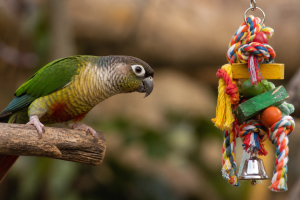
Strategic toy placement significantly impacts whether parrots will accept or ignore new enrichment items. Placing toys in the wrong location can intensify neophobic responses and create lasting avoidance behaviors.
Optimal toy placement strategies:
- Start at the cage perimeter: Place new toys outside the cage for 2-3 days before moving them inside.
- Avoid food and water areas: Keep toys at least 12 inches away from eating and drinking stations.
- Use neutral territory: Introduce toys in areas your parrot visits but doesn’t consider “prime real estate.”
- Maintain sight lines: Ensure toys don’t block your parrot’s view of important areas or escape routes.
- Consider cage traffic: Avoid placing toys in frequently used flight paths between perches.
Common placement mistakes that guarantee toy rejection:
- Hanging toys directly above favorite perches.
- Blocking access to food or water with new items.
- Overcrowd the cage with multiple new toys simultaneously.
- Placing large toys in small spaces where they dominate the environment.
Choose placement based on your parrot’s established routines and comfort zones for the highest success rate.
What Toy Characteristics Make Parrots More Likely to Ignore New Items?
Specific toy features can trigger stronger avoidance responses in parrots, making them more likely to ignore new enrichment items. Understanding these characteristics helps bird owners select toys that minimize neophobic reactions.
High-rejection toy features:
Size and proportion:
- Toys larger than the parrot’s body often seem threatening.
- Items that swing or move unpredictably when the bird moves nearby.
- Toys that significantly alter the cage’s visual landscape.
Color and pattern:
- Extremely bright or neon colors that don’t exist in nature.
- High-contrast patterns that might resemble predator markings.
- Reflective or shiny surfaces that create unexpected light movements.
Sound and movement:
- Toys that make noise with minimal contact (overly sensitive bells).
- Items with multiple moving parts that create complex motion.
- Toys that produce sounds similar to alarm calls or predator noises.
Texture and material:
- Unfamiliar materials like certain plastics or metals.
- Textures that feel dramatically different from natural materials.
- Items with strong chemical odors from manufacturing.
Choose toys with these parrot-friendly characteristics instead:
- Natural wood and rope materials.
- Earth-tone colors (browns, greens, muted yellows).
- Simple designs with 1-2 interactive elements.
- Appropriate sizing (roughly 1/2 to 3/4 of your parrot’s body length).
How Can You Help Your Parrot Accept New Toys?
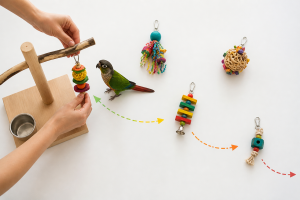
Successfully introducing new toys requires patience and a systematic approach that respects your parrot’s natural caution while encouraging exploration. The key is making the unfamiliar feel safe and rewarding.
Step-by-step toy introduction process:
- Pre-introduction (Days 1-3)
- Place the toy where your parrot can see it, but outside the cage.
- Let your bird observe the item during normal daily activities.
- Avoid forcing attention or making the toy the focus.
- Gradual approach (Days 4-7)
- Move the toy closer to the cage, but still outside.
- Place it near areas where you interact with your parrot.
- Allow your bird to see you handling the toy calmly.
- Cage introduction (Days 8-10)
- Attach the toy to the cage exterior first.
- Choose a location away from food, water, and favorite perches.
- Monitor your parrot’s stress levels and adjust placement if needed.
- Interior placement (Days 11-14)
- Move the toy inside the cage to a neutral location.
- Start with minimal interaction—just presence.
- Gradually move closer to active areas as acceptance increases.
Acceleration techniques that work:
- Model interaction: Play with similar toys yourself, where your parrot can watch.
- Treat association: Place favorite treats near (not on) the new toy.
- Familiar scents: Rub the toy with your hands to add your scent.
- Peer pressure: If you have multiple birds, let the braver one investigate first.
Stop the process and restart if your parrot shows severe stress signs like refusing to eat, excessive vocalization, or aggressive behavior toward you.
When Should You Be Concerned About Toy Rejection?
While some toy rejection is normal parrot behavior, certain patterns may indicate underlying issues that require attention or professional consultation.
Normal rejection patterns:
- Initial wariness lasting 1-3 weeks with gradual improvement.
- Selective acceptance (liking some new toys but not others).
- Seasonal variations in toy interest.
- Preference changes as the bird matures.
Concerning rejection patterns that warrant evaluation:
Complete enrichment avoidance:
- Refusing all new toys for months despite proper introduction.
- Showing fear of previously accepted toy types.
- Avoiding all cage modifications or environmental changes.
Extreme stress responses:
- Refusing to eat or drink when any new item appears.
- Self-destructive behaviors triggered by toy introduction.
- Aggressive attacks on new items seem disproportionate.
Behavioral regression:
- Previously, social birds became withdrawn after toy rejection.
- Increased stereotypic behaviors (repetitive movements, over-preening).
- Loss of interest in previously enjoyed activities.
When to consult an avian veterinarian:
- Toy rejection is accompanied by changes in eating, sleeping, or vocalization patterns.
- Physical symptoms like feather plucking or lethargy.
- Sudden personality changes that coincide with enrichment attempts.
- Suspected vision or mobility issues affecting toy interaction.
Early intervention can prevent minor behavioral issues from becoming entrenched problems that are harder to resolve.
FAQ
How long should I wait before removing a rejected toy?
Give your parrot at least 2-3 weeks to accept a new toy before considering removal. Many birds need this full period to overcome their initial neophobia and begin investigating new items.
Can I force my parrot to interact with new toys?
Never force interaction, as this can create lasting negative associations and increase fear responses. Instead, use gradual introduction techniques and positive reinforcement when your bird shows any interest.
Do all parrot species reject new toys equally?
No, rejection intensity varies by species. African Greys and Amazon parrots typically show stronger neophobic responses, while some conures and cockatiels may be more accepting of new items.
Should I remove old toys when introducing new ones?
Keep familiar toys in place when introducing new items. Removing comfort objects can increase stress and make your parrot more resistant to changes in their environment.
What’s the best time of day to introduce new toys?
Introduce toys during calm periods when your parrot is relaxed, typically mid-morning or early afternoon. Avoid introduction during feeding times, evening roosting, or high-activity periods.
Can the number of toys in the cage affect acceptance?
Yes, overcrowded cages can overwhelm parrots and increase rejection rates. Maintain 3-5 toys maximum in most cages, rotating items weekly to maintain interest without causing stress.
Do hand-fed parrots accept toys more easily than parent-raised birds?
Hand-fed parrots often show less neophobia toward human-introduced items, but individual personality matters more than rearing method. Some parent-raised birds are naturally curious and accept toys readily.
Should I buy expensive toys if my parrot might ignore them?
Start with inexpensive, simple toys to learn your parrot’s preferences before investing in costly items. Many parrots prefer homemade toys from safe household materials over expensive commercial options.
Can I use food to encourage toy interaction?
Yes, but place treats near (not on) new toys initially. Once your parrot accepts the toy’s presence, you can incorporate food-based enrichment directly into or onto the toy structure.
What should I do if my parrot destroys toys immediately?
Immediate destruction often indicates acceptance and natural foraging behavior. Provide destructible toys made from safe materials and consider it a positive sign of engagement rather than rejection.
Do parrots need different types of toys for mental stimulation?
Yes, rotate between puzzle toys, foraging opportunities, chewing items, and comfort objects. Different toy types stimulate various natural behaviors and prevent boredom from routine.
Can other pets in the household affect toy acceptance?
Other animals can influence parrot behavior, but the effect varies by individual. Some parrots become more cautious with other pets present, while others may be encouraged by observing different species interact with objects.
Conclusion
Understanding why parrots ignore new toys comes down to respecting their natural survival instincts while providing patient, systematic introduction methods. Neophobia serves an important biological function, but it doesn’t have to prevent your bird from enjoying enriching play experiences.
Success requires matching your approach to your individual parrot’s personality, using proper placement strategies, and maintaining realistic timelines for acceptance. Remember that toy rejection often reflects normal caution rather than behavioral problems, and most parrots will eventually investigate new items when they feel safe.