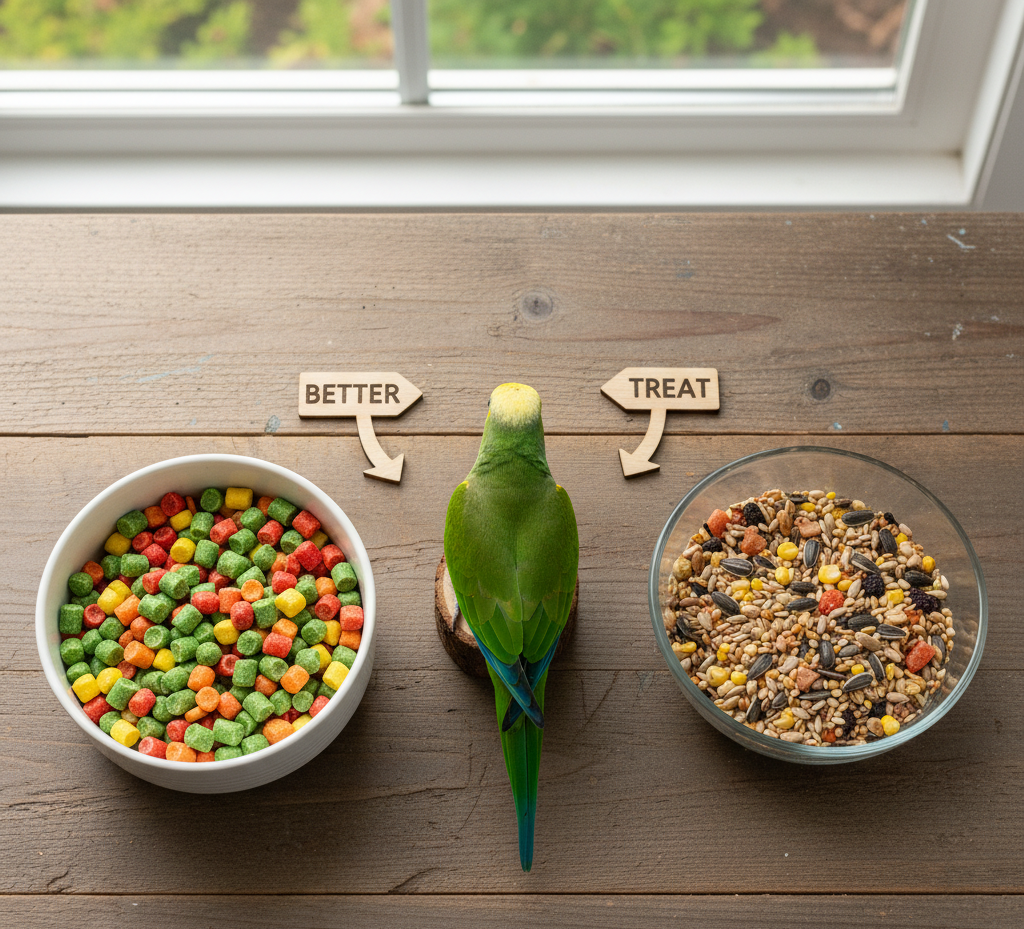
Choosing the right diet for a pet parrot is the most significant decision a bird owner can make. The debate over pellets vs. seed mix often leaves enthusiasts confused about what truly supports avian health. While seeds are a natural part of a wild bird’s life, the sedentary lifestyle of a pet parrot changes their nutritional requirements.
Most avian veterinarians agree that a diet consisting primarily of high-quality pellets is superior to an all-seed diet. Pellets provide a balanced nutritional profile that prevents selective eating. However, seeds still hold a specific place in a parrot’s life as treats and foraging tools.
To ensure your feathered friend lives a long, vibrant life, you must understand how these two food sources impact their internal organs, feather quality, and mental well-being.
The Nutritional Breakdown: Pellets vs Seed Mix
To understand which is better, we must look at what each food actually contains. The primary difference lies in consistency and fortification.
What are Parrot Pellets?
Pellets are a manufactured food source in which grains, seeds, vitamins, and minerals are ground and compressed into uniform pieces.
- Complete Nutrition: Each bite contains the same ratio of protein, fats, and vitamins.
- No Selective Eating: Parrots cannot pick out “tasty” high-fat pieces and leave the healthy parts behind.
- Fortification: Most pellets are enriched with Vitamin D3, Calcium, and Vitamin A, which are often lacking in captive birds.
What is a Seed Mix?
A seed mix is a collection of various dried seeds, grains, and sometimes dried fruits or nuts.
- Natural Instinct: It mimics the foraging behavior birds exhibit in the wild.
- High Energy: Seeds are calorie-dense, which is great for wild birds flying miles a day, but often too much for a bird in a cage.
- Vulnerability to Deficiencies: Seeds are naturally low in Calcium and Vitamin A.
Why Pellets are Usually the Better Base Diet?
In the wild, parrots spend a massive amount of energy searching for food. In a home environment, they don’t burn those calories. This is why a controlled, nutritionally dense base like pellets is preferred.
Preventing Malnutrition
The leading cause of early death in pet parrots is malnutrition. According to the Association of Avian Veterinarians, a bird fed only seeds is essentially eating “junk food.” Seeds are high in fats but lack the essential amino acids and minerals needed for bone and feather health.
Consistent Intake
When you offer a seed mix, a parrot will almost always pick out the sunflower seeds and safflower seeds first. These are the “potato chips” of the bird world. By feeding pellets, you ensure the bird receives a scientifically balanced diet in every mouthful.
Better Feather and Skin Health
Vitamin A deficiency is rampant in seed-eating birds. This leads to dull, brittle feathers and flaky skin. Birds on a pellet-based diet usually exhibit much brighter colors and smoother plumage because their bodies have the building blocks to create healthy keratin.
The Hidden Dangers of an All-Seed Diet
While seeds look “natural,” relying on them as a sole food source can lead to chronic health issues that are often invisible until it is too late.
Fatty Liver Disease (Hepatic Lipidosis)
When a parrot consumes too much fat and doesn’t exercise enough, the liver begins to store excess fat. Over time, the liver becomes enlarged and fails. This is one of the most common “silent killers” among parrots, particularly Amazon and Quaker parrots.
Obesity
An overweight bird cannot fly well, may develop pressure sores on its feet (bumblefoot), and has a shortened lifespan. Seeds are incredibly calorie-dense. A small bowl of sunflower seeds can contain more fat than a bird needs for an entire week.
Iodine Deficiency
Many seed-only diets are deficient in iodine. This is particularly dangerous for smaller species like Budgies, as it can cause goiters (enlargement of the thyroid gland) that interfere with their breathing and swallowing.
Are Seeds Ever Good for Parrots?
Despite the nutritional drawbacks, seeds are not “evil.” They serve an important purpose when used correctly and in moderation.
Mental Enrichment and Foraging
Parrots are highly intelligent. Pellets can be boring because they all taste the same. Seeds provide a tactile experience. Peeling a seed or cracking a nut provides mental stimulation.
Pro Tip: Use seeds as rewards during training sessions or hide them inside foraging toys to keep your bird’s mind active.
High Metabolism Requirements
Some species, like Macaws, actually require a higher fat content in their diet compared to a Cockatiel. For these birds, high-quality nuts and specific seeds are essential supplements to their pellet base.
How to Transition Your Parrot from Seeds to Pellets?
If your bird is a “seed junkie,” switching to pellets can be a challenge. Parrots are often suspicious of new foods and may go on a hunger strike if you swap the bowls.
- The Gradual Mix Method: Start by mixing 25% pellets with 75% seeds. Over three weeks, gradually increase the pellet ratio while decreasing the seed amount.
- The “Warm Water” Trick: Some birds prefer the texture of softened food. Adding a little warm water or unsweetened organic juice to the pellets can make them more enticing.
- Modeling Behavior: Parrots are social eaters. If they see you “eating” the pellets (pretending to eat or eating a bird-safe cereal that looks similar), they may become curious enough to try a bite.
- The Morning Meal: Birds are hungriest in the morning. Offer only pellets for the first two hours of the day. If they don’t eat, provide their usual mix later to prevent them from starving.
The Role of Fresh Foods: The “Chop” Method
Neither pellets nor seeds should be the only thing your parrot eats. For a truly optimal diet, you should incorporate “Chop.” This is a finely minced mixture of fresh vegetables, leafy greens, and occasionally low-sugar fruits.
Best Vegetables for Parrots:
- Orange Veggies: Sweet potatoes (cooked), carrots, and squash for Vitamin A.
- Leafy Greens: Kale, dandelion greens, and Swiss chard for Calcium.
- Legumes: Cooked beans and lentils for plant-based protein.
Avoid feeding your parrot avocado, chocolate, caffeine, or onion, as these can be toxic. You can find a full list of safe foods on the Merck Veterinary Manual.
Species-Specific Dietary Considerations
Not every parrot has the same needs. A “one size fits all” approach doesn’t work in avian nutrition.
| Species Group | Recommended Pellet % | Seed/Nut % | Fresh Veggie % |
|---|---|---|---|
| Small Birds (Budgies, Cockatiels) | 60% | 20% | 20% |
| Medium Birds (Conures, African Greys) | 70% | 10% | 20% |
| Large Birds (Macaws, Cockatoos) | 50% | 30% (Nuts) | 20% |
| Eclectus Parrots | 20% | 10% | 70% (Mainly fresh) |
Summary of Best Practices
When deciding between pellets vs seed mix, the goal is balance.
- Base: 60% to 75% of the daily intake should be high-quality, organic pellets.
- Freshness: 20% to 25% should be fresh, dark leafy greens and colorful vegetables.
- Rewards: 5% to 10% can be seeds and nuts, used mainly for training and mental stimulation.
By moving away from a seed-heavy diet, you are giving your parrot the best chance at a disease-free life. Always consult with a certified avian veterinarian before making drastic changes to your bird’s eating habits, especially if the bird is older or has underlying health issues.
Proper nutrition is the foundation of a happy, talking, and active companion. Whether you have a tiny budgie or a giant macaw, what goes into their bowl today determines how many years you will spend together.
FAQs
Which is better for pet parrots: pellets or seeds?
For most pet parrots, pellets are the better base diet. They provide balanced nutrition and prevent the bird from choosing only high-fat seeds. Experts generally recommend a diet of 60-80% pellets.
Can a parrot live on seeds alone?
A parrot can survive on seeds for several years, but they rarely thrive. Seed-only diets often lead to chronic health issues, poor feather quality, and a significantly shorter lifespan compared to birds on a balanced diet.
How do I know if my parrot is eating the pellets?
Check the bottom of the cage. If you see “powder” or “crumbs” in the bowl that match the color of the pellets, it means your bird is grinding them up and consuming them. Always monitor your bird’s weight with a gram scale during a diet transition.
Should I buy colored or natural pellets?
Natural, uncolored pellets are usually better. Artificial dyes can make it difficult to monitor the color of your bird’s droppings (a key health indicator), and some birds may develop sensitivities to food coloring.