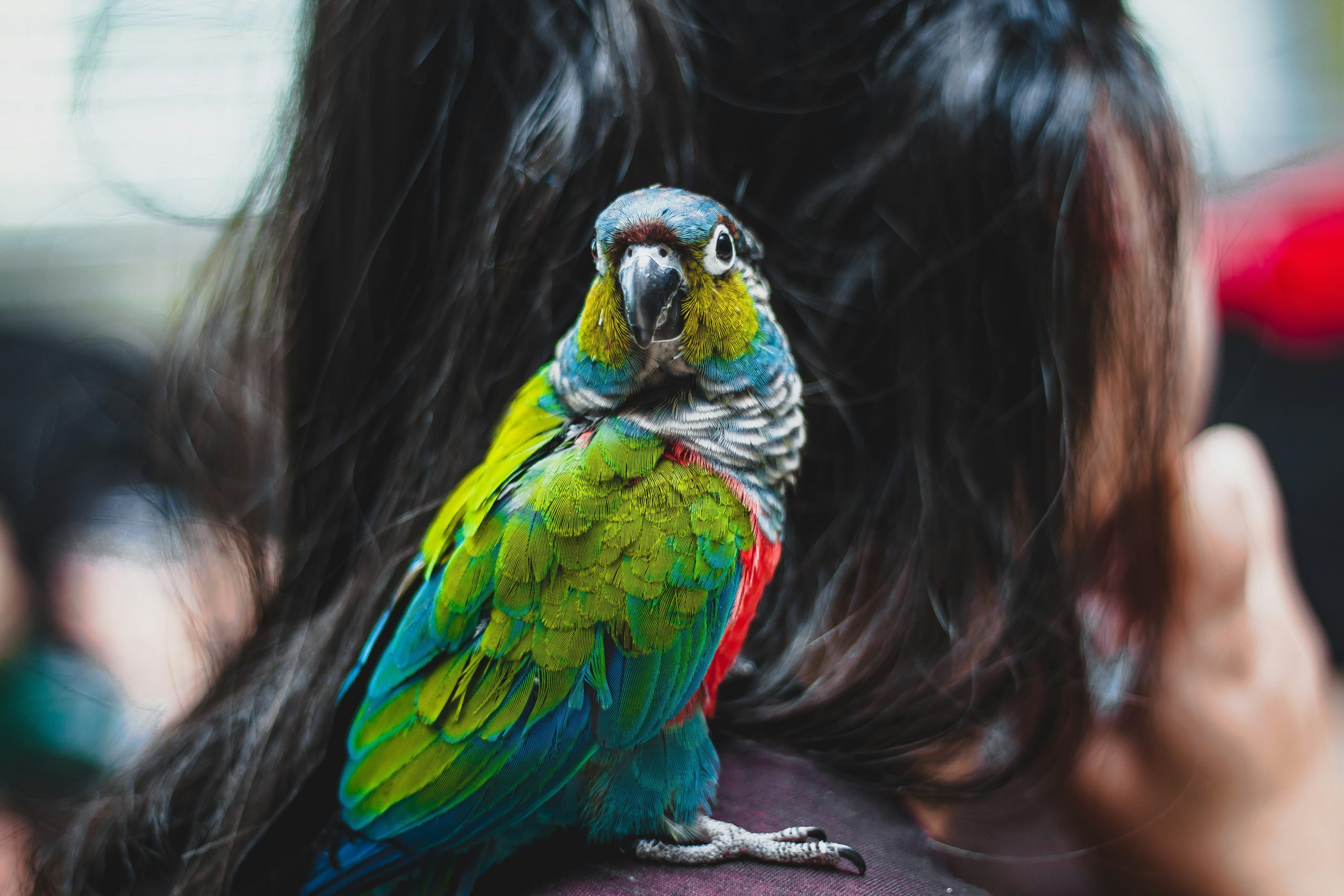
Teaching your feathered friend new skills is about more than just showing off at parties. It is a vital way to keep their highly intelligent minds active and build a deep bond of trust between you. Parrots are social creatures that thrive on interaction and mental challenges.
When you engage in training, you prevent common behavioral issues such as feather-plucking or excessive screaming.
Why Training is Vital for Parrot Mental Health?
Parrots possess cognitive abilities comparable to those of a young child. In the wild, they spend their days foraging, solving problems, and communicating with a flock. In a home environment, they often lack these natural outlets for their energy.
Training sessions act as a substitute for wild foraging behaviors. It gives them a “job” to do, which reduces stress and anxiety. According to the Association of Avian Veterinarians, mental stimulation is just as important as a balanced diet for a bird’s longevity.
Consistent training also establishes a clear line of communication. Your bird learns what you want from them, and you learn to read their subtle body language. This mutual understanding creates a safer and more harmonious household.
Essential Supplies for Successful Parrot Training
Before you start, you need the right tools. Preparation ensures that the training session flows smoothly without distractions.
- High-Value Treats: Find a snack your bird loves but doesn’t get in their daily meals. Safflower seeds, small walnut pieces, or dried mango work well.
- A Clicker: This tool marks the exact moment your bird does the right thing. It is a precise way to say “yes” that the bird understands instantly.
- A T-Stand or Neutral Space: Training is most effective away from their cage. The cage is their “bedroom,” and they might be more interested in playing with their toys there than listening to you.
- A Target Stick: A simple wooden chopstick or a dedicated target tool helps guide your bird’s movement without using your hands.
Fundamental Beginner Tricks
Every parrot owner should start with these three basics. They form the foundation for every advanced trick you will want to teach later.
The “Step Up” Command
This is the most important skill any parrot can learn. It allows you to move your bird safely from one place to another.
- Offer your finger or a perch near the bird’s chest, just above their legs.
- Gently press against the lower chest to throw them slightly off balance.
- As they lift a foot to steady themselves, say “Step up.”
- The moment both feet are on your hand, click and give a treat.
Target Training
Targeting teaches your bird to follow an object. This is useful for moving them into a carrier or away from a dangerous area.
- Hold the target stick near the bird’s beak.
- Wait for them to touch the tip of the stick out of curiosity.
- Click and treat immediately when their beak makes contact.
- Slowly move the stick further away so the bird has to take a step to touch it.
The “Wave” (Shaking Hands)
The wave is a crowd-pleaser and very easy to teach once your bird knows how to step up.
- Offer your hand as if you want them to step up.
- When the bird lifts its foot, pull your hand back slightly so they can’t actually step on you.
- Say “Wave” or “Hello.”
- Click and treat while their foot is still in the air.
Intermediate Tricks for Active Birds
Once your bird understands that “action equals treat,” you can move on to more physical activities.
The “Spin” or Turn Around
This trick helps your bird burn off physical energy and is visually impressive.
- Hold a treat just above your bird’s head so they can see it.
- Move the treat in a slow, wide circle around the bird’s body.
- The bird will naturally follow the treat with its beak, turning its whole body.
- Say “Spin” or “Turn” as they complete the circle.
- Click and reward.
Playing Dead
This trick requires a high level of trust, as birds are naturally vulnerable when on their backs.
- Start by getting your bird comfortable with being touched on their back.
- Gently cup your hand over their back and slowly roll them over onto a soft surface.
- Use the command “Bang” or “Sleepy.”
- Initially, reward them for staying on their back for just one second.
- Increase the duration gradually before giving the treat.
Fetching Small Objects
Fetch proves that parrots can understand the concept of bringing items back to a specific person.
- Place a small, bird-safe ball or plastic ring in front of your bird.
- Reward them for picking it up.
- Hold a small bowl or your hand under their beak.
- When they drop the item into your hand or the bowl, click and give a high-value reward.
- Slowly move further away so they have to walk or fly back to you with the item.
Advanced Verbal and Action Tricks
Advanced tricks require patience and many short sessions over several weeks.
Mimicking Specific Words
While some species are better talkers than others, most parrots can learn a few words if taught correctly.
- Choose a short, punchy word like “Hello” or “Treat.”
- Say the word clearly and with high energy. Parrots love enthusiastic sounds.
- Wait for the bird to make any sound in response.
- Reward any vocalization at first.
- Gradually, only reward sounds that closely resemble the target word.
Putting Toys in a Basket
This is a variation of fetch that demonstrates higher-level sorting skills.
- Set up a small wicker basket and several different colored toys.
- Teach the bird to pick up a specific toy.
- Guide them to the basket using the target stick.
- Give the command “Put it away.”
- Reward them only when the toy lands inside the basket.
The “Big Wings” Display
This trick involves the bird fully extending its wings on command. It is a natural behavior that you are simply cueing.
- Watch for when your bird naturally stretches its wings after waking up or coming out of the cage.
- Immediately say “Big wings!” and offer a treat.
- To prompt the behavior, some owners gently blow on the bird’s chest or quickly raise their own arms.
- Click and reward the moment the wings spread.
Common Training Challenges and Solutions
Training isn’t always a straight line. You will encounter hurdles, but most can be easily overcome with a change in strategy.
The Bird is Not Interested in Treats
If your bird ignores the food, they might be too full. Schedule training sessions right before their main meal. Also, ensure the treat is truly special—something they only get during these lessons.
The Bird is Fearful of the Target Stick
Some birds are naturally neophobic (afraid of new things). Place the stick near their cage for a few days so they get used to seeing it. Reward them for just looking at it, then for moving toward it, before asking them to touch it.
Distractions in the Environment
A TV, other pets, or family members moving around can break a parrot’s focus. Choose a quiet room for the first few weeks of training. Once the trick is “solid,” you can practice it in noisier environments to generalize the behavior.
Safety Tips for Training Sessions
Your bird’s safety and comfort should always come first. Forced training leads to bites and a breakdown in the relationship.
- Keep Sessions Short: Five to ten minutes is plenty. Any longer and the bird will lose interest or become frustrated.
- End on a Success: Always finish a session with a trick the bird knows well. This ensures they leave the interaction feeling confident and eager to return.
- Watch Body Language: If your bird’s feathers are pinned flat, or if they are backing away, stop the session. They are telling you they have had enough.
- Never Use Punishment: Scolding or “time-outs” do not work with parrots. They don’t understand the connection. Instead, ignore the wrong behavior and reward the right one.
Building a Lifelong Partnership
The best tricks you can teach your parrot are the ones that both of you enjoy. Training is a conversation. It transforms your bird from a “pet in a cage” into a true companion and family member.
By using positive reinforcement and patience, you unlock the incredible potential of the avian mind. Start today with the “Step Up” command, and within a few months, you might find your bird fetching your keys or telling you “Good morning” with a wave.
Frequently Asked Questions About Parrot Tricks
What is the best age to start training a parrot?
You can start training at any age. While younger birds are often more “malleable,” older rescue birds benefit immensely from the structure of training. It can help an older bird feel more secure in a new home.
How long does it take to teach a trick?
Simple tricks like “Step Up” can be learned in a day. Complex tricks like “Fetch” or talking might take weeks or even months of consistent daily practice.
Can all parrot species learn tricks?
Yes. From the tiny Budgerigar to the massive Hyacinth Macaw, all parrots are capable of learning. Some species, like the African Grey, are known for verbal mimicry, while others, like Caiques, are famous for their physical acrobatics.
My bird keeps biting during training. What should I do?
Biting is usually a sign of frustration or fear. You may be moving too fast or asking for too much. Scale back the difficulty and ensure you aren’t forcing the bird to participate. Training should always be a choice for the bird.