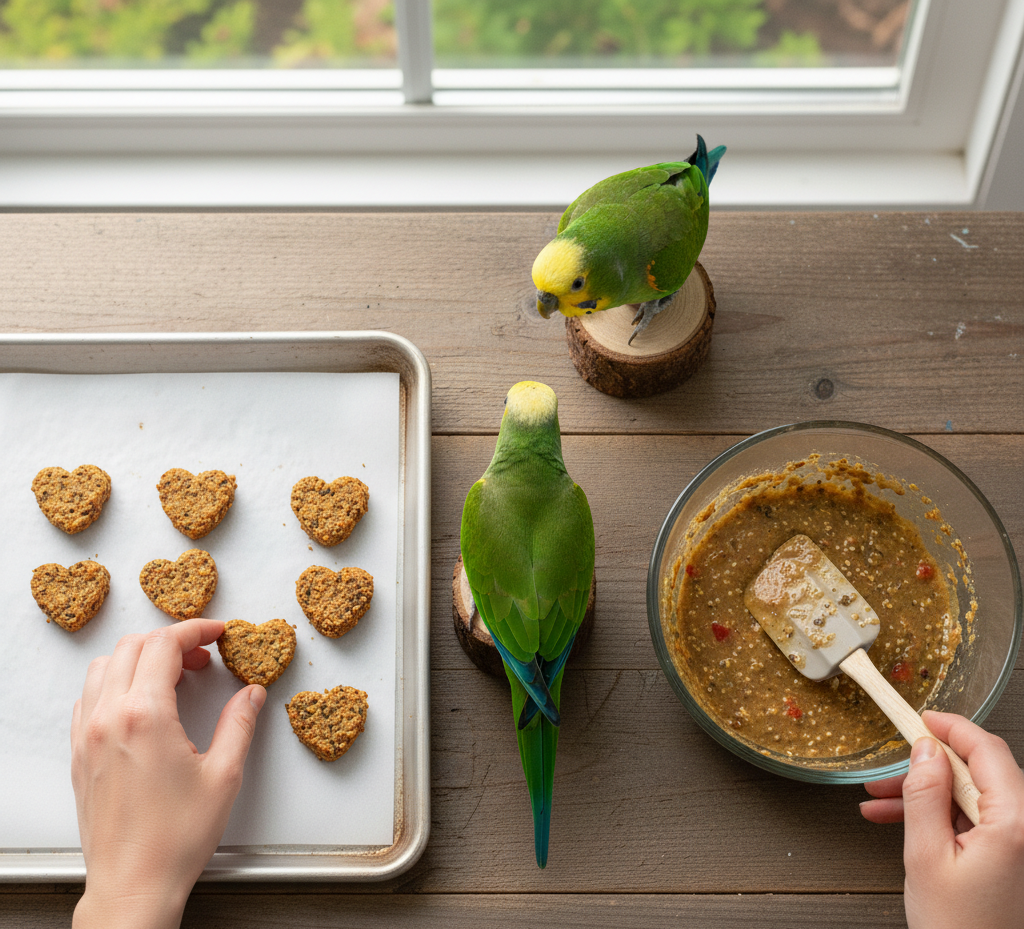
Creating bird snacks often results in a dusty, messy cage floor. You need reliable methods for homemade parrot treats that don’t crumble after baking. The secret to a solid, durable block is replacing excess moisture with bird-safe binding agents.
Standard recipes use water and whole seeds, which create hollow air pockets during baking. When your bird bites down, those pockets collapse instantly. This guide provides precise measurements, specific binding ingredients, and baking techniques to create mess-free foraging blocks.
Why Do Most Bird Snacks Turn to Dust?
Understanding the baking process is the first step to fixing crumbly bird food. Parrots cannot safely consume traditional baking staples like heavily refined wheat flour or artificial gums. Without gluten to hold ingredients together, treats naturally want to fall apart.
Many bird owners mix loose seeds with water or a raw egg, then bake them quickly at a high temperature. High heat cooks the outside of the treat while leaving the inside raw and wet. As the treat cools, the trapped internal moisture turns the surrounding seeds to mush, leading to immediate crumbling.
You must eliminate internal moisture while using ingredients that naturally harden when dried. This requires specific temperature control and alternative binders.
The Best Bird-Safe Binding Agents
You need natural “glue” to hold seeds and pellets together. Below are the most effective, safe binding agents for avian baking.
Ground Flaxseed (Flax Egg)
Flaxseed is a nutritional powerhouse for birds and acts as a brilliant binder. When ground flaxseed is mixed with water, it forms a thick, gelatinous texture. This gel locks onto seeds and hardens firmly in the oven.
To make a flax egg, mix 1 tablespoon ground flaxseed with 3 tablespoons warm water. Let it sit for ten minutes until it thickens. This mixture replaces traditional eggs and creates a much harder final product.
Mashed Sweet Potato
Sweet potatoes are rich in Vitamin A, which is essential for avian respiratory health. They also contain complex starches that bake into a dense, solid block.
Always boil or steam the sweet potato until completely soft before mashing it. Never use canned sweet potatoes packed in syrup or added sugars. The natural starch will bind loose seeds into a firm bar that withstands heavy beak pressure.
Chia Seed Gel
Similar to flax, chia seeds absorb liquid and form a strong gel. You do not need to grind chia seeds to activate this property.
Mix one tablespoon of chia seeds with three tablespoons of water, then wait 15 minutes. The resulting gel coats larger ingredients, such as nuts and dried fruit, preventing them from falling out of the baked treat.
Unsweetened Organic Applesauce
Applesauce provides moisture for mixing without adding excess water, which can lead to crumbling—the natural pectins in the apple act as a mild binder.
You must check the ingredient label carefully. Only use 100% pure applesauce with zero added sugar, artificial sweeteners, or preservatives.
Top Recipes: Homemade Parrot Treats That Don’t Crumble After Baking
These recipes focus on structural integrity. They utilize the binders mentioned above and require slow baking times to ensure a rock-hard finish.
Recipe 1: The Sweet Potato Foraging Brick
This recipe creates a dense, hard block ideal for medium to large parrots like Macaws, African Greys, and Amazons.
Ingredients You Will Need:
- 1/2 cup cooked, mashed sweet potato (unseasoned).
- 1/4 cup high-quality bird pellets (slightly crushed).
- 1/4 cup mixed bird-safe seeds (safflower, pumpkin, sunflower).
- 1 tablespoon ground flaxseed mixed with 3 tablespoons water.
- 1 tablespoon dried, unsweetened coconut flakes.
Step-by-Step Instructions:
- Preheat your oven to 250°F (120°C). Prepare a baking sheet with unbleached parchment paper.
- Mix the ground flaxseed and water in a small bowl. Let it sit for ten minutes to form a gel.
- In a large bowl, combine the mashed sweet potato, crushed pellets, seeds, and coconut flakes.
- Fold the thickened flax gel into the sweet potato mixture. Stir until every seed is heavily coated.
- Press the mixture firmly onto the parchment paper. Form it into a tightly packed square, about half an inch thick.
- Bake for 45 to 60 minutes. The low temperature dehydrates the block rather than cooking it, preventing cracks.
- Remove from the oven and let it cool entirely before cutting it into squares.
Recipe 2: Berry and Oat Power Pellets
This recipe mimics the texture of commercial nutria-berries. It is perfect for smaller species like Cockatiels, Conures, and Budgies.
Ingredients You Will Need:
- 1/2 cup rolled oats (pulsed into a rough flour in a blender).
- 1/4 cup mixed small seeds (millet, canary grass seed).
- 2 tablespoons unsweetened pure applesauce.
- 1 tablespoon finely chopped bird-safe berries (blueberries or raspberries).
- 1/2 tablespoon chia seeds mixed with 1.5 tablespoons water.
Step-by-Step Instructions:
- Set your oven to 225°F (107°C). Line a tray with parchment paper.
- Mix the chia seeds and water. Wait fifteen minutes for the gel to set.
- Blend the rolled oats until they resemble coarse sand. This fine texture fills the gaps between the seeds, preventing crumbling.
- Combine the oat flour, small seeds, and chopped berries in a bowl.
- Add the applesauce and chia gel. Use your hands to knead the dough until it holds together firmly when squeezed.
- Roll the dough into small, marble-sized balls. Press them tightly.
- Bake for 50 minutes until the outside is entirely dry and hard to the touch.
Recipe 3: The Almond Butter Crunch Stick
Nut butters provide healthy fats and act as a sticky mortar for dry ingredients.
Ingredients You Will Need:
- 3 tablespoons unsalted, raw almond butter (no added oils or salt).
- 1/3 cup regular parrot seed mix.
- 1/4 cup finely chopped bird-safe nuts (walnuts, almonds).
- 1 tablespoon water
Step-by-Step Instructions:
- Preheat the oven to 250°F (120°C).
- Warm the almond butter slightly to make it easier to stir.
- Mix the warm almond butter with the seed mix and chopped nuts. Add a tablespoon of water to help distribute the butter evenly.
- Press the mixture into the bottom of a silicone mold. Silicone molds force the ingredients tightly together, creating a solid final shape.
- Bake for 35 to 40 minutes.
- Leave the treats inside the silicone mold until they are 100% cool. Removing them while warm will break the bonds, causing crumbling.
Essential Baking Techniques to Prevent Cracking
Even with the right ingredients, poor baking methods will ruin the texture. Follow these technical rules for solid results.
The Low and Slow Method
Never bake bird treats above 250°F (120°C). High heat causes rapid expansion of the moisture inside the treat. This expansion creates steam pockets that blow tiny holes through the structure, making it fragile.
Baking at 250°F acts as a dehydration process below. It slowly and evenly pulls moisture out from the center to the crust.
Using Silicone Molds
Free-forming treats on a flat baking sheet often leads to loose edges. Silicone baking molds physically constrain the ingredients. As the binder heats up, the mold walls force the expanding ingredients to compress against each other, creating a dense brick.
The Cooling Phase
Do not skip the cooling process. Binders like sweet potato and fruit purée are soft while hot. They only solidify as their temperature drops. Moving or cutting the treats straight out of the oven will cause them to shatter. Let them rest on the counter for at least two hours.
Proper Storage for Maximum Hardness
Air and humidity are the enemies of homemade treats. If left exposed to room humidity, dry treats will absorb moisture from the air, becoming soft or crumbly within days.
- Airtight Containers: Store cooled treats in glass mason jars with rubber seals.
- Refrigeration: For recipes containing fresh fruit or sweet potatoes, refrigerate them. They will stay solid and fresh for up to one week.
- Freezing: To build a long-term stash, freeze the treats in airtight bags. They will last up to three months. You can serve them frozen; many larger parrots enjoy the extra challenge of chewing a frozen block.
Toxic Ingredients to Strictly Avoid in Avian Baking
When formulating your own recipes, you must cross-reference every ingredient with avian safety guidelines. The ASPCA Animal Poison Control Center lists several common human foods as highly toxic to birds.
Never include the following items in your baking:
- Avocado: Contains persin, which causes cardiac distress and sudden death in birds.
- Chocolate or Cocoa Powder: Contains theobromine, which parrots cannot metabolize.
- Xylitol: A common artificial sweetener found in human peanut butters. It causes severe liver damage in pets.
- Salt: Birds have very small kidneys. Added salt leads to immediate dehydration and kidney failure.
- Dairy Products: Birds lack the digestive enzymes needed to break down lactose. Milk and cheese cause severe intestinal distress.
- Onion and Garlic: These destroy red blood cells in birds, leading to anemia.
Always stick to single-ingredient, unprocessed items when gathering your baking supplies.
Frequently Asked Questions
How do you get bird seed to stick together?
You get bird seed to stick together by using natural, bird-safe binders instead of plain water. Ground flaxseed mixed with water (a flax egg), mashed sweet potato, and chia seed gel are the most effective options. These ingredients form a sticky paste that hardens completely upon dehydrating at low temperatures.
Can I use honey to bind parrot treats?
You should use honey very sparingly, if at all. While natural, raw honey acts as a strong glue, it contains an extremely high amount of sugar. Too much sugar causes obesity and yeast infections in the avian digestive tract. Use fruit purées or flaxseed instead.
Why did my homemade bird treats fall apart?
Your treats likely fell apart for one of three reasons: baking at too high a temperature, lacking a proper binding agent, or removing them from the tray before they cooled. Treat recipes require slow dehydration at 250°F and absolute cooling before handling to maintain their structure.
Is peanut butter safe for baking bird snacks?
Peanut butter is technically safe, but it carries a high risk of aflatoxins (mold spores) that are fatal to birds. If you use nut butter as a binder, opt for high-quality, unsalted almond butter or cashew butter instead. Always verify there is no added salt or xylitol.
Final Thoughts on Mess-Free Bird Snacks
Baking your own flock’s snacks gives you total control over their nutrition. By swapping loose water for structural binders like flax and sweet potato, you eliminate cage waste. Stick to the low-heat dehydration method, always allow adequate cooling time, and verify every ingredient for safety. With these techniques, you can consistently produce homemade parrot treats that don’t crumble after baking, providing your bird with healthy, challenging foraging opportunities.