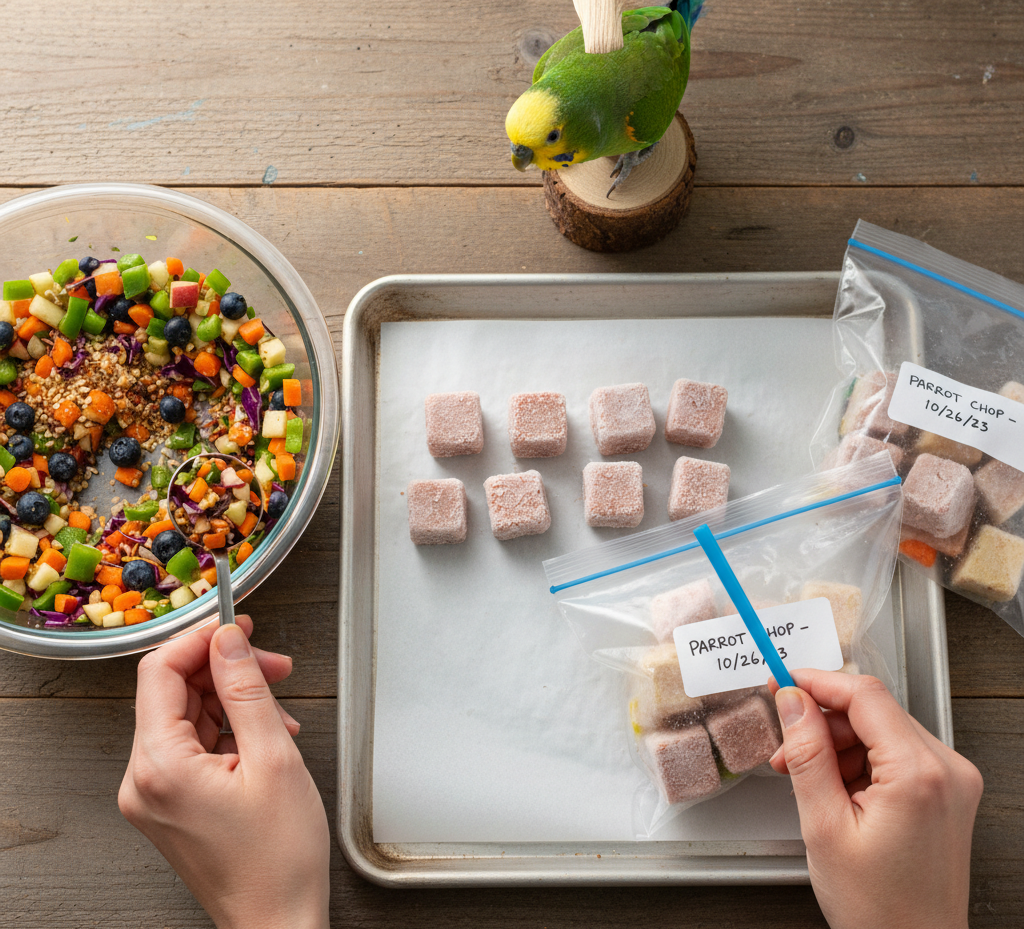
Moisture control is the absolute secret to storing fresh bird food. If you want to know how to freeze parrot chop without ruining the texture, you must master the flash-freezing method. Wet vegetables turn into unappetizing mush when ice crystals expand and break plant cell walls.
By thoroughly drying your produce and spreading it out before freezing, the individual pieces stay separate. This keeps the final meal crisp and appealing for your feathered pet. You will save hours of daily prep time without sacrificing your bird’s dietary needs.
Why Does Bird Food Turn Mushy in the Freezer?
Vegetables contain a significant amount of water within their cellular structures. When placed directly into a cold environment, this internal water slowly forms large ice crystals. These jagged crystals puncture the delicate walls of the plant cells.
Once the food thaws, the damaged cells collapse and leak all their stored water. This creates a soggy, wet puddle at the bottom of the food bowl. Parrots rely heavily on texture and beak-feel when eating. Most birds will completely reject wet, slimy food, leading to wasted effort and money.
How to Freeze Parrot Chop Without Ruining the Texture?
Follow these exact steps to ensure your daily vegetable mixes stay crisp. This method prevents clumping and stops freezer burn before it starts.
Step 1: Select Firm Ingredients
Choose fibrous, low-moisture vegetables for your bulk batches. Carrots, broccoli, cauliflower, and sweet potatoes hold their shape well even in extreme cold. Avoid adding soft fruits or watery greens during this step.
Step 2: Wash and Thoroughly Dry
Wash your produce using a bird-safe vegetable wash or diluted apple cider vinegar. You must remove every drop of surface moisture before chopping. Use a heavy-duty salad spinner for leafy greens, then pat everything dry with clean paper towels.
Step 3: Chop Uniformly
Cut your ingredients into sizes appropriate for your specific bird species. Macaws need chunky pieces, while cockatiels require finely minced bits. Consistent sizing ensures everything freezes at the same rate.
Step 4: Flash Freeze on a Tray
Line a large baking sheet with parchment paper. Spread the chopped mix across the paper in a single, thin layer. Do not let the pieces overlap, or they will fuse. Place the uncovered tray in the freezer for 1 to 2 hours, until the pieces are rock-solid.
Step 5: Transfer to Airtight Storage
Remove the tray and immediately break up any minor clumps. Scoop the frozen pieces into vacuum-sealed bags or heavy-duty silicone pouches. Squeeze out all the excess air before sealing to prevent frost buildup.
Best Low-Moisture Vegetables for Freezing
Building a freezer-safe base requires picking the right garden items. Root vegetables are your best option because of their dense, woody fibers. Beets, turnips, and parsnips retain their crunch exceptionally well after a hard freeze.
Cruciferous vegetables also survive the extreme cold without losing their structure. Brussels sprouts, kale stems, and cabbage add great foraging texture for beaks. You can safely prepare weeks ‘ worth of these ingredients at once.
Cooked grains and legumes also freeze wonderfully if prepared correctly. Quinoa, brown rice, and cooked chickpeas provide essential protein. Just make sure these cooked additions are completely cool and dry before mixing them with your raw vegetables. You can check the National Center for Home Food Preservation for exact cooling times on cooked grains.
Ingredients to Completely Avoid Freezing
Certain items will ruin an entire batch of food regardless of your preparation methods. Cucumber, celery, and iceberg lettuce are practically entirely water. They will disintegrate into useless liquid the moment they hit room temperature.
Tomatoes and grapes should also be kept out of your long-term storage bags. Their thin skins rupture instantly, creating a sticky, acidic mess. Serve these wet items fresh as daily treats rather than mixing them into bulk meals.
Berries are another tricky category. While you can freeze blueberries and raspberries, they bleed heavily upon thawing. If you include them, your entire batch will turn a muddy purple, which might scare off picky birds from the bowl.
Choosing the Right Storage Containers
Air exposure destroys frozen produce faster than anything else. Standard thin plastic sandwich bags allow oxygen to seep in over time. This leads directly to freezer burn, which ruins both the taste and the nutritional profile.
Vacuum sealers are the absolute best investment for making bulk parrot diets. They pull every trace of air out of the packaging. If you do not own a vacuum sealer, heavy silicone stasher bags are an excellent secondary option.
Glass mason jars work well if you pack them tightly to the brim. However, you must leave exactly one inch of headspace at the top of the jar. The food will expand slightly as the remaining internal moisture freezes.
Adding Moisture-Absorbing Toppers
Even with perfect technique, minor condensation happens during the thawing process. You can easily fix this by adding dry ingredients right before serving. This step saves batches that feel slightly too damp.
Rolled oats are incredibly effective at soaking up rogue water droplets. Sprinkle a pinch over the bowl and stir it in thoroughly. The oats will swell slightly, creating a pleasing texture while drying out the rest of the meal.
Chia seeds and ground flaxseed serve the same purpose while adding vital Omega-3 fatty acids. These tiny seeds lock up moisture instantly. According to the Avian Welfare Coalition, seeds should be supplemented carefully based on your bird’s size, so use them sparingly as a drying agent.
The Correct Way to Thaw Parrot Chop
How you bring the food back to room temperature matters just as much as how you chill it. Never microwave frozen bird food. Microwaves create dangerous hot spots that can severely burn a parrot’s sensitive crop.
The safest method is to move a single portion into the refrigerator overnight. Place the sealed daily portion in a glass dish on the bottom shelf. It will slowly defrost over eight to twelve hours, preserving the structural integrity of the plants.
If you forget to take it out the night before, use a cold water bath. Put the sealed bag of food into a bowl of cool tap water for twenty minutes. Never use hot water, as this forces the vegetables to sweat out their internal juices.
Does Freezing Destroy Nutritional Value?
Many bird owners worry that cold storage removes vital vitamins. Flash-freezing locks in nutrients better than keeping produce in the fridge for a week. The rapid drop in temperature suspends the natural degradation of plant enzymes.
Vitamin A and Beta-Carotene remain highly stable during freezing. These are the most critical nutrients for feather health and immune function in exotic birds. Your sweet potatoes and carrots will stay nutritionally dense for months.
Some Vitamin C is lost during the initial chopping phase due to exposure to oxygen. However, the loss halts completely once the food hits sub-zero temperatures. You are providing a much healthier meal with a frozen batch than with wilted, week-old fresh fridge vegetables.
Organizing Your Freezer for Easy Feeding
Stacking flat vacuum bags saves the most space in a cramped kitchen. When you seal your bags, press the food down into a flat, one-inch sheet. These rigid sheets stack neatly on top of each other like books.
Label every single container with a permanent marker. Write down the exact ingredients and the date the batch was created. Rotating your stock ensures your bird gets the freshest possible meals.
Create a dedicated shelf or bin just for avian diets. Keep raw meats and human foods strictly separated to avoid cross-contamination. Hygiene is vital for keeping your pet safe from household bacteria.
How Long Does Frozen Parrot Chop Last?
Properly prepared vegetable mixes will last up to six months in a deep chest freezer. Standard kitchen freezers attached to refrigerators experience slight temperature fluctuations due to the door opening and closing repeatedly. In a standard kitchen unit, aim to use your batches within three months.
Check your older bags for ice crystals. If a thick layer of snow has formed inside the plastic, the food has suffered freezer burn. It is not toxic, but your bird will likely refuse to eat the rubbery pieces.
Never refreeze food that has completely thawed. Repeated temperature cycling encourages rapid bacterial growth. Only pull out exactly what your bird will eat in a single day.
Portion Sizing for Daily Convenience
Guessing the right amount of food every morning is frustrating. Pre-portioning your batches stops you from wasting expensive organic produce. Silicone ice cube trays are fantastic for small birds like budgies or conures.
Press your chopped mix firmly into the cube slots and freeze. Once solid, pop the cubes out and store them in a large bag. You can grab exactly two or three cubes each morning with zero guesswork.
For larger birds, use half-cup silicone muffin liners. These create perfect puck-shaped servings that fit beautifully into standard stainless steel cage bowls.
Maintaining Cleanliness During Prep
Bulk food preparation requires strict sanitation. Your cutting boards and knives must be sterile before you begin breaking down the produce. Exotic birds have sensitive digestive tracts that poorly tolerate wild bacteria.
Use separate cutting boards for your bird’s food than you use for your own family meals. Wooden boards hold onto moisture and harbor hidden bacteria deep in the knife grooves. Switch to dense, non-porous plastic cutting mats that can run through the dishwasher.
Wash your hands frequently, especially if you step away to handle your bird during prep. A clean workspace ensures the food remains uncontaminated before it reaches cold storage.
Frequently Asked Questions
Can I freeze chopped in ice cube trays?
Yes, silicone ice cube trays work perfectly for small daily portions. Press the dry ingredients firmly into the slots, freeze until solid, and then transfer the cubes to an airtight bag. This method prevents the cubes from taking on strange freezer odors.
Does freezing destroy the nutrients in bird food?
No, freezing actually preserves most vitamins. The rapid cold stops natural enzyme breakdown. While minor Vitamin C loss occurs during the initial cutting process, the majority of the vital nutrients remain locked inside the plant cells.
How long can a thawed chop sit in the cage?
Thawed produce should never sit in a food bowl for more than three to four hours. Bacteria multiply rapidly on wet vegetables at room temperature. Remove any uneaten portions by the early afternoon to prevent crop infections.
Final Thoughts on Bird Food Storage
Mastering how to freeze parrot chop without compromising its texture will completely transform your daily routine. By removing moisture, flash-freezing on flat trays, and utilizing vacuum storage, you bypass the mushy stage entirely.
Your bird gets to enjoy a crunchy, highly nutritious meal every single morning. You get to reclaim your time while ensuring your pet receives a world-class diet. Stick to low-moisture vegetables, manage your portion sizes, and always thaw safely in the refrigerator.