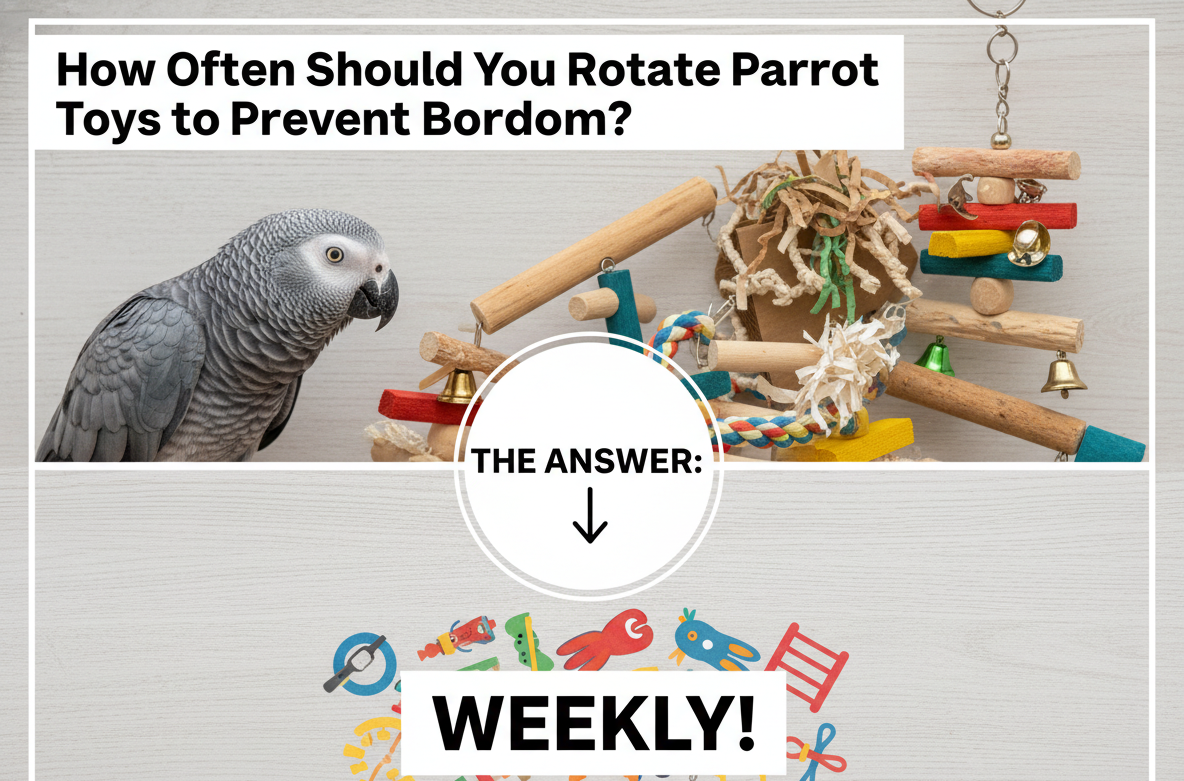
Parrots possess the intelligence of a young human child. Leaving them in a cage with the same items week after week leads to severe mental stagnation. If you are asking how often you should rotate parrot toys to prevent boredom, the baseline rule is every 7 to 14 days.
Highly intelligent species require even more frequent changes. An African Grey or a Cockatoo might need a partial cage refresh every 3 to 5 days. Swapping items out keeps their minds sharp and mimics the constant problem-solving they do in the wild.
How Often Should You Rotate Parrot Toys?
To directly answer the question, follow this basic timeline for cage rotation:
- Small Birds (Budgies, Cockatiels): Rotate 2-3 items every 10-14 days.
- Medium Birds (Conures, Quakers): Swap out 3-4 items every 7 to 10 days.
- Large Birds (Macaws, Cockatoos, African Greys): Change 4+ items every 3-7 days.
Never replace every single item at once. Completely stripping a cage can cause panic and anxiety in sensitive birds. Leave one or two favorite “comfort” items untouched while introducing new challenges in different zones.
Recognizing the Signs of Avian Boredom
Birds cannot tell us they are tired of their surroundings. Instead, they act out. Recognizing these behavioral shifts helps you adjust your rotation schedule before permanent bad habits form.
Destructive Feather Habits
Plucking is the most obvious red flag. A bird without enough mental stimulation will turn its beak on itself. If you notice bald patches on the chest or under the wings, evaluate the cage environment immediately.
Consulting an avian vet is always the first step for feather loss. The Association of Avian Veterinarians provides directories to find certified professionals. Once medical issues are ruled out, boredom is the primary suspect.
Increased Screaming and Vocalizations
Wild flocks use loud calls during the morning and evening. This is normal. However, non-stop screaming throughout the day indicates frustration.
A bored bird yells because it has nothing else to occupy its beak. Introducing complex puzzle feeders drastically reduces attention-seeking noise.
Lethargy and Pacing
Does your pet sit rigidly on the same perch all day? Do they pace back and forth along the bottom grate? These repetitive movements mirror zoo animals trapped in barren enclosures.
A healthy bird explores, climbs, and tests different textures. Pacing means the current layout offers zero surprises or challenges.
Why Frequent Changes Mimic Natural Behaviors?
Wild parrots spend up to 70% of their waking hours foraging for food. They tear bark, crack nuts, and navigate complex tree branches. Captivity removes these daily survival tasks.
Changing the cage layout replaces the lost thrill of foraging. Moving a food bowl forces the bird to plan a new climbing route. Adding a fresh shredding block satisfies the natural urge to destroy wood.
When you ignore cage management, you create a stagnant environment. Stagnation causes the bird’s brain actually to shrink in cognitive ability over time. Regular rotation is not a luxury; it is basic preventative healthcare.
Step-by-Step Guide to Effective Toy Rotation
Randomly tossing new items into an enclosure rarely works. You need a structured system to maximize engagement without overwhelming your pet. Follow these exact steps for a successful swap.
Step 1: Build a Two-Bin Storage System
You do not need to buy new accessories every week. Instead, build a “toy library.” Purchase enough items to fill a cage three times over.
Sort these items into two plastic storage bins: “Currently In Use” and “Resting.” On rotation day, pull items from the Resting bin. The bird will treat items they haven’t seen in a month as brand new.
Step 2: Wash and Inspect Everything
Before placing a used item into the Resting bin, wash it. Feces and food remnants harbor deadly bacteria. Use hot water and unscented dish soap for hard plastics and acrylics.
Discard any wood pieces heavily soiled with droppings. Check all quick-links, ropes, and chains for fraying. Frayed cotton rope is highly dangerous and causes crop impaction if swallowed.
Step 3: Map Out Foraging Zones
Divide the cage into three vertical zones: top, middle, and bottom. Most owners crowd the top section and ignore the bottom. Spread the stimulation out.
Place complex foraging boxes near the bottom to encourage ground exploration. Hang swing and preening materials near the top where the bird feels safest. Change the locations during every swap cycle.
Step 4: The 50% Rule
Never swap 100% of the accessories. Keep the main sleeping perch and the primary water dish in consistent locations. Swap out roughly half of the chewing and puzzle accessories.
This provides a balance of comfort and novelty. Sensitive species like African Greys will refuse to enter a completely unfamiliar cage.
The Essential Categories of Avian Enrichment
Not all accessories serve the same purpose. A cage filled with hard acrylic blocks will frustrate a bird that wants to chew. Balance your rotation by including one item from each of the following categories.
1. Foraging and Puzzle Feeders
These are the most critical tools for mental health. Instead of serving nuts in an open bowl, hide them. Wrap almonds in unbleached coffee filters or stuff them inside cardboard tubes.
Commercial puzzle boxes require the bird to slide panels or turn wheels to access treats. According to experts at Lafeber Company, working for food drastically improves an indoor bird’s mood. Rotate the difficulty level of these puzzles weekly.
2. Destructible and Shredding Materials
Parrots have strong beaks designed to crush shells and tear bark. You must provide acceptable outlets for this destruction. If you don’t, they will chew your furniture or their own feathers.
Stock up on balsa wood, mahogany pods, and yucca chips. Woven palm leaves and plain paper rolls also work well. Expect these items to be destroyed completely; that means they did their job.
3. Preening and Comfort Items
Many single birds over-preen themselves because they lack a mate. Preening toys offer an alternative target. These usually feature tightly bound cotton ropes, leather strips, or sisal fibers.
Monitor these items closely. Trim any long, loose threads immediately. A bird can easily strangle itself or lose a toe if caught in a frayed string.
4. Noise-Making and Foot Toys
Some birds love making a racket. Stainless steel bells (ensure the clapper is welded shut) or hard acrylic rattles serve this purpose well.
Foot toys are small, unattached objects that the bird manipulates with its claws. Toss a few hard plastic balls, wooden spools, or clean pinecones onto the cage floor to encourage manual dexterity.
Common Mistakes Owners Make During Transitions
Even well-meaning owners make errors when adjusting cage layouts. Avoid these specific traps to ensure a smooth transition.
Forcing Interaction Too Quickly
If you hang a bright, intimidating object right next to the food bowl, a scared bird might starve itself. Always place highly unusual or large items on the outside of the cage first.
Let the bird observe the new object for a few days. Once they stop showing signs of fear (sleeked feathers, leaning away), move it inside.
Buying the Wrong Size
A macaw will snap a budgie-sized wooden block in one second, creating dangerous splinters. Conversely, a cockatiel cannot grip a large chunk of manzanita. Always buy accessories rated for your specific species’ beak strength.
Ignoring the Outside Playstand
Your rotation schedule must include the bird’s out-of-cage playstand. If the play tree remains identical all year, the bird will eventually refuse to leave its main cage.
Tie fresh leafy branches to the play gym. Scatter new foot objects on the base. The playstand should be an exciting destination, not a static piece of furniture.
DIY Rotation Hacks to Save Money
Keeping a fresh supply of parrot toys gets expensive. You can supplement store-bought items with safe household materials.
- Cardboard Boxes: Clean, tape-free cardboard boxes make excellent targets for shredding. Hide treats inside and fold the flaps shut.
- Phone Books: Hang an old, soft-cover phone book from the cage bars. Birds love ripping the thin paper pages out one by one.
- Coffee Filters: Unbleached paper coffee filters can be crumpled into balls with a nut hidden inside. They are cheap, safe, and highly entertaining.
- Safe Branches: Harvest branches from apple, willow, or birch trees. Always scrub them and bake them at 200°F for an hour to kill outdoor insects before serving. Check safety lists on sites like PetMD before bringing any outdoor wood inside.
Adapting Rotation to Seasonal Changes
A bird’s behavior fluctuates with the seasons. Spring often triggers hormonal nesting behaviors. During this time, be careful with the types of items you introduce.
Avoid giving your bird dark, enclosed boxes or fabric tents during the spring. These triggers activate nesting instincts and provoke severe territorial aggression. Remove these items from the rotation until the hormonal season passes.
During the winter, when daylight is shorter, focus heavily on bright, highly interactive puzzle feeders to keep their energy levels up indoors.
Evaluating the Success of Your Schedule
How do you know if your rotation plan works? Watch the trash tray. A successful cage environment generates a massive mess.
If you pull out the bottom tray and find splinters of wood, shredded paper, and cracked puzzle boxes, your bird is engaged. A perfectly clean tray at the end of the day is a bad sign. It means the bird sat still and did nothing.
Keep a simple log. Note which materials your bird destroys immediately and which ones sit untouched. Stop buying the untouched materials and double down on the favorites, offering them in new, challenging configurations.
Keeping Your Bird Mentally Sharp
Figuring out how often you should rotate parrot toys to prevent boredom is the foundation of good avian husbandry. Stick to the 7 to 14-day rule, adjust for your specific bird’s intelligence, and never swap the entire cage at once.
By building a solid toy library, thoroughly washing items, and prioritizing foraging challenges, you eliminate destructive habits. A stimulated parrot is a quiet, healthy, and happy companion. Keep the environment unpredictable, and your bird will thrive.