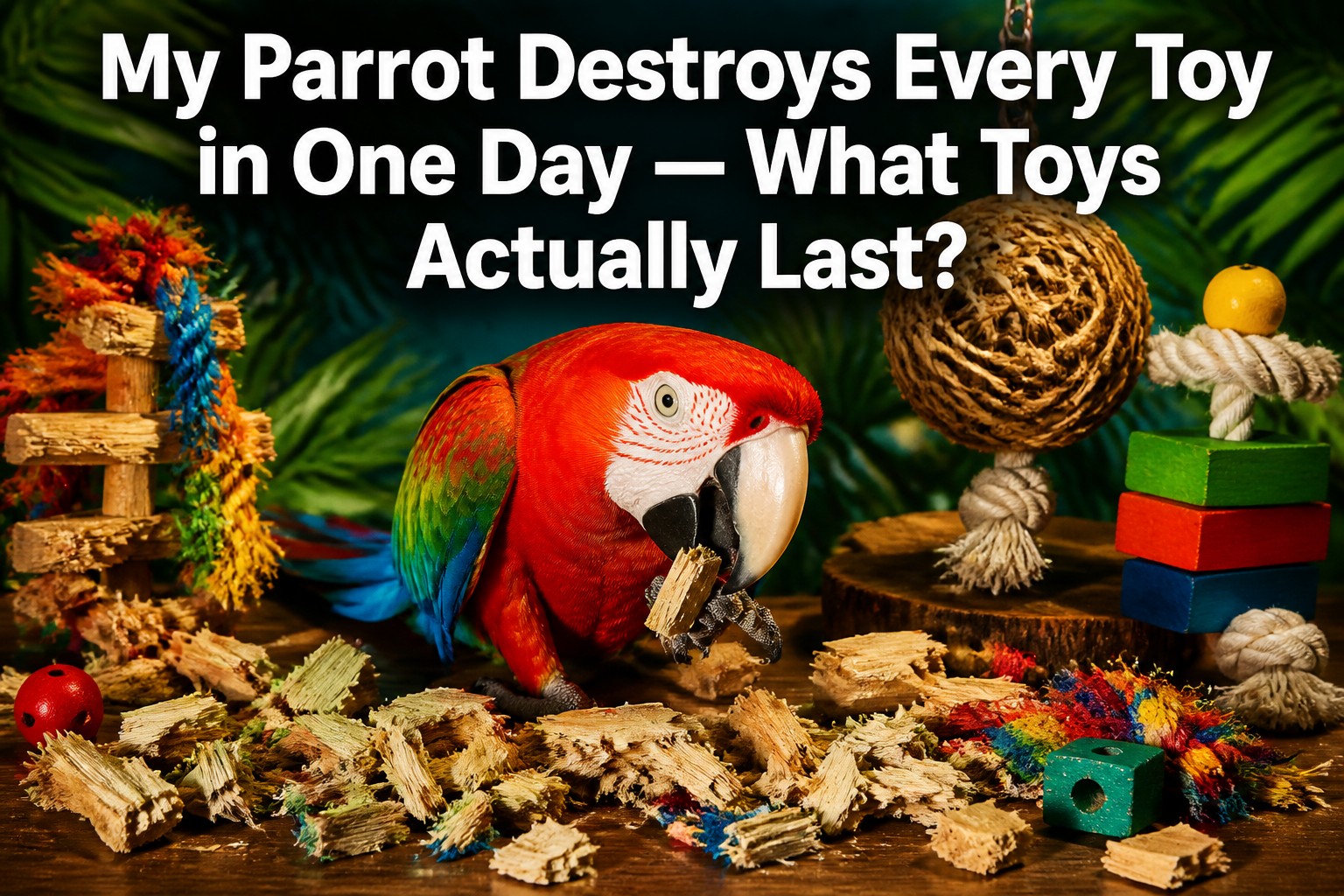
When your parrot destroys every toy within hours, the solution lies in choosing toys made from stainless steel, thick acrylic, hardwood blocks, and vegetable-tanned leather. These materials can withstand even the strongest beaks, while traditional rope and plastic toys typically last minutes with destructive birds. Focus on foraging toys and puzzle feeders that engage your parrot’s intelligence rather than simple chew toys.
Why Does My Parrot Destroy Every Toy So Quickly?
Parrots destroy toys rapidly because their beaks generate 300-400 PSI of pressure, and they possess natural foraging instincts that drive them to dismantle objects. Large species like macaws and cockatoos can splinter most commercial “parrot toys” in minutes.
Your bird’s destructive behavior stems from several factors:
Beak Strength by Species:
- Macaws: 300-400 PSI (can crack Brazil nuts).
- Cockatoos: 250-350 PSI (designed for hard seed pods).
- African Greys: 200-300 PSI (precision destruction).
- Amazons: 150-250 PSI (persistent chewing).
Natural Behaviors:
- Foraging instincts drive them to tear apart objects searching for food.
- Beak maintenance requires regular grinding and scraping.
- Territory marking through destruction and rearrangement.
- Boredom relief when mental stimulation is lacking.
Choose metal and acrylic toys if your parrot destroys rope toys in under an hour. Stick with hardwood options if your bird enjoys methodical chewing over quick destruction.
What Materials Actually Survive Destructive Parrots?
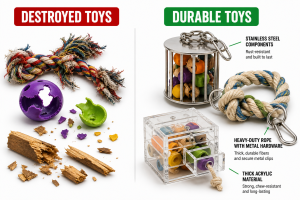
Stainless steel, thick acrylic (1/4 inch minimum), untreated hardwood, and vegetable-tanned leather are the only materials that consistently survive aggressive parrot beaks for weeks or months instead of hours.
Indestructible Materials That Work:
Stainless Steel Components:
- Foraging boxes with steel mesh.
- Chain links (welded, not split rings).
- Hardware and connectors.
- Puzzle mechanisms.
Thick Acrylic Plastics:
- Minimum 1/4 inch thickness for small parrots.
- 3/8 inch thickness for macaws and cockatoos.
- Clear foraging containers.
- Puzzle toy housings.
Safe Hardwoods:
- Apple wood: Sweet taste, medium hardness.
- Birch blocks: Dense, long-lasting.
- Maple pieces: Very hard, slow to destroy.
- Willow branches: Softer but safe for daily chewing.
Vegetable-Tanned Leather:
- Thick strips (1/4 inch minimum).
- No chemical treatments or dyes.
- Natural brown color only.
- Properly sourced from bird toy suppliers.
Avoid completely: Rope (cotton or sisal), thin plastic, painted wood, galvanized metal, and anything with small removable parts.
How to Choose Toys When Your Parrot Destroys Every Toy?
Select toys based on engagement time rather than destruction resistance alone. The goal is to provide 2-4 hours of active play before replacement, not permanent indestructibility.
Selection Criteria by Parrot Size:
Small Parrots (Conures, Cockatiels):
- 1/8 to 1/4 inch acrylic thickness.
- Thin hardwood strips.
- Small stainless steel components.
- Budget: $15-25 per lasting toy.
Medium Parrots (African Greys, Amazons):
- 1/4 inch minimum acrylic thickness.
- Medium hardwood blocks (2-3 inches).
- Reinforced metal hardware.
- Budget: $25-40 per lasting toy.
Large Parrots (Macaws, Large Cockatoos):
- 3/8 inch minimum acrylic thickness.
- Large hardwood blocks (4+ inches).
- Heavy-duty stainless steel construction.
- Budget: $40-80 per lasting toy.
Smart Shopping Rules:
Look for these features:
- Multiple material combinations (wood + metal + acrylic).
- Replaceable components rather than a single-use design.
- Foraging elements that hide treats.
- Puzzle mechanisms that require problem-solving.
Red flags to avoid:
- “Parrot-safe” rope toys (marketing term, not durability indicator).
- Thin plastic components.
- Split rings or weak connection points.
- Toys under $10 (usually too flimsy for destructive birds).
What Are the Most Indestructible Parrot Toys Available?
Stainless steel foraging wheels, thick acrylic puzzle feeders, and hardwood block assemblies represent the most durable options that can survive months of aggressive use by large parrots.
Top Indestructible Toy Categories:
Foraging Wheels and Boxes:
- Stainless steel mesh containers.
- Rotating mechanisms with metal gears.
- Hidden treat compartments.
- Engagement time: 30-60 minutes daily for weeks.
Puzzle Feeders:
- Thick acrylic construction (3/8 inch+).
- Multiple chambers and sliding panels.
- Screw-on lids rather than snap-fit.
- Engagement time: 45-90 minutes daily for months.
Hardwood Block Systems:
- Large maple or birch blocks (6+ inches).
- Metal hardware for hanging.
- Replaceable wood pieces.
- Engagement time: 2-4 hours daily for weeks.
Heavy-Duty Swings:
- Stainless steel chain construction.
- Thick hardwood perches (2+ inch diameter).
- Welded connection points.
- Lifespan: 6-12 months with proper maintenance.
Recommended Brands for Durability:
Planet Pleasures: Hardwood and metal combinations.
Bonka Bird Toys: Heavy-duty construction focus.
Super Bird Creations: Thick acrylic puzzle feeders.
Caitec: Stainless steel foraging systems.
Common mistake: Buying multiple cheap toys instead of fewer indestructible ones. Better approach: Invest in 3-4 high-quality toys that rotate weekly.
DIY Solutions When Store-Bought Toys Don’t Last
Create custom toys using stainless steel hardware, untreated hardwood blocks, and thick leather strips when commercial options fail to survive your parrot’s destruction habits.
Safe DIY Materials and Sources:
Hardware Store Finds:
- Stainless steel chain (welded links only).
- Untreated hardwood blocks.
- Stainless steel quick-links and carabiners.
- Natural fiber rope (hemp or manila, supervised use only).
Specialty Bird Suppliers:
- Vegetable-tanned leather strips.
- Food-grade acrylic sheets.
- Bird-safe wood varieties.
- Stainless steel mesh and hardware.
Simple DIY Toy Designs:
Hardwood Block Assembly:
- Drill holes through 4-6 hardwood blocks (2-4 inches each).
- Thread the stainless steel chain through the holes.
- Secure with stainless steel quick-links.
- Hang from the cage top with a carabiner.
Foraging Bottle System:
- Use thick plastic bottles (laundry detergent containers work).
- Drill multiple 1-inch holes around the bottle.
- Fill with treats and crumpled paper.
- Secure cap and hang with a steel chain.
Leather Strip Mobile:
- Cut vegetable-tanned leather into 1/4 inch strips.
- Attach to a stainless steel ring using metal clips.
- Vary strip lengths for different textures.
- Replace individual strips as needed.
Safety requirements: All metal components must be stainless steel, no galvanized or painted hardware, and supervise initial use to ensure no small parts break off.
How to Rotate Toys to Maximize Engagement?
Implement a 3-4 toy rotation system where only one toy is available daily to maintain novelty and extend the functional lifespan of expensive, indestructible toys.
Effective Rotation Strategies:
Weekly Rotation Schedule:
- Monday/Tuesday: Foraging puzzle toy.
- Wednesday/Thursday: Hardwood chewing blocks.
- Friday/Saturday: Stainless steel chain mobile.
- Sunday: Rest day or supervised rope toy.
Engagement Tracking:
- Note which toys generate 30+ minutes of active play.
- Remove toys when interaction drops below 15 minutes.
- Reintroduce after a 1-2 week absence.
- Replace components rather than entire toys when possible.
Storage and Maintenance:
- Clean toys with bird-safe disinfectant between rotations.
- Store in separate containers to maintain scent novelty.
- Replace worn components (leather strips, wood blocks) individually.
- Keep backup components for quick repairs.
Budget optimization: Four high-quality rotating toys ($100-200 total) cost less annually than replacing cheap toys weekly ($300+ per year).
Summary
When your parrot destroys every toy in record time, success lies in choosing materials that match their incredible beak strength and natural behaviors. Stainless steel foraging toys, thick acrylic puzzle feeders, and hardwood block systems provide the durability needed to survive even the most destructive birds while offering meaningful enrichment.
Frequently Asked Questions
How long should a good parrot toy last with a destructive bird?
Quality indestructible toys should provide 2-4 weeks of daily engagement before needing component replacement, while cheap toys typically last 1-3 hours.
Are rope toys ever safe for parrots that destroy everything?
Rope toys pose ingestion risks for destructive parrots and should only be used under direct supervision, if at all, with heavy chewers.
What’s the difference between “parrot-safe” and truly indestructible toys?
“Parrot-safe” refers to non-toxic materials, while indestructible toys use thick, durable materials like stainless steel and heavy acrylic that resist destruction.
How much should I budget monthly for toys with a destructive parrot?
Budget $30-50 monthly for replacement components and new toys, focusing on fewer high-quality items rather than many cheap ones.
Can I give my parrot cardboard boxes if they destroy expensive toys anyway?
Yes, cardboard boxes make excellent free enrichment for destructive parrots, but shouldn’t replace proper toys entirely, as they lack durability for extended play.
Do foraging toys last longer than regular chew toys?
Foraging toys typically last 2-3 times longer because they engage problem-solving behaviors rather than pure destruction instincts.
Is it normal for large parrots to destroy toys in minutes?
Yes, macaws and large cockatoos can destroy most commercial toys within 15-30 minutes due to their powerful beaks and natural foraging behaviors.
Should I remove toys once my parrot starts destroying them?
Remove toys only if they create safety hazards (loose strings, small parts); otherwise, allow supervised destruction as natural enrichment.
What’s the strongest material for parrot toys?
Stainless steel provides the highest destruction resistance, followed by thick acrylic (3/8 inch+) and dense hardwoods like maple.
How do I know if a toy is too easy or too hard for my parrot?
Ideal toys provide 30-60 minutes of engagement before destruction; toys destroyed in under 15 minutes are too easy, while ignored toys may be too difficult.